The Rise of Live Edge Tables: A Historical Perspective
Live edge tables are often seen as a modern design statement, but their roots run much deeper. The idea of preserving the natural edge of a tree has a long history in fine woodworking, most notably through the work of George Nakashima, whose furniture helped elevate natural-edge slabs into pieces of lasting artistic and architectural significance. His approach treated wood not as a material to be forced into perfection, but as something with its own voice, movement, flaws, and story.
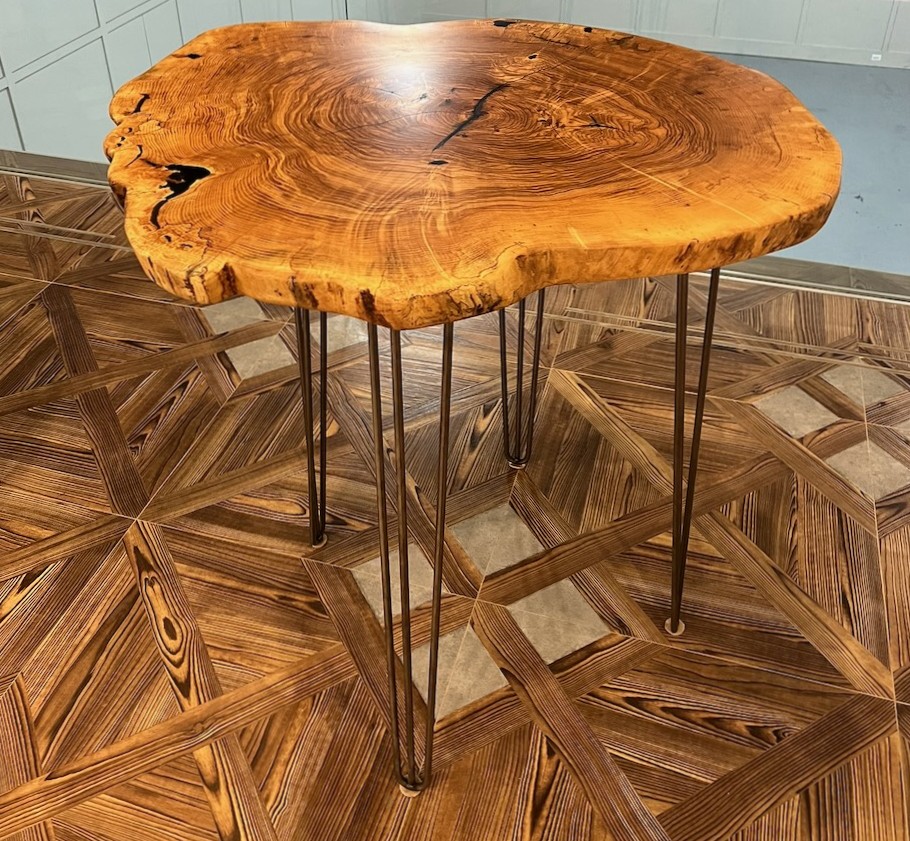
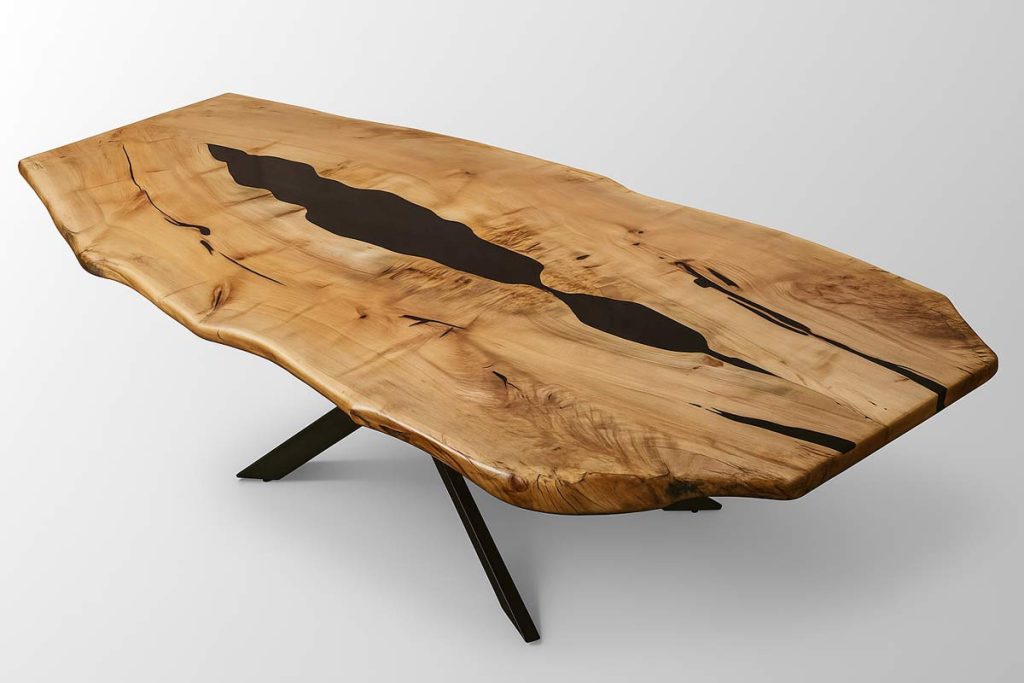
That same philosophy continues to make live edge furniture so meaningful today. Rather than cutting away every irregularity, a live edge table preserves the original shape of the tree, allowing the grain, curves, knots, color, and character of the slab to become part of the finished design. The result is a table that feels natural, substantial, and completely unique.
At Makers Woodshop, every live edge table begins with the wood itself. Because we mill and dry all of our own material, we are involved in the process long before the piece becomes furniture. From selecting the right log to the final coat of finish, each step matters. A beautiful live edge table is not just about choosing a dramatic slab. It is about cutting it properly, drying it carefully, surfacing it, stabilizing it where needed, and finishing it in a way that protects the wood while allowing its natural beauty to show through.
Should Bark Stay on a Live Edge Table?
One of the most common questions people ask is whether the bark should be left on the edge of the table. While bark can look rustic and natural at first, we typically recommend removing it.
Bark and wood do not behave the same way. They have different densities and absorb moisture at different rates. The connection between the bark and the wood is naturally weak, which means bark can loosen, crack, or fall off over time.
For a table that is meant to last, the better approach is to remove the bark and the cambium layer beneath it. This leaves a clean, solid live edge that still follows the original shape of the tree but is much more durable for everyday use. The goal is not to make the edge look artificial. The goal is to preserve the natural form while creating a surface that is stable, smooth, and ready for finishing.
Why the Process Matters
A finished live edge table may look effortless, but the process behind it is detailed and time-consuming. Wood is a natural material, and it continues to respond to moisture, temperature, tension, and time. That means the quality of the finished table depends heavily on how the slab was handled from the beginning.
Because Makers Woodshop cuts, dries, surfaces, and finishes all of our own wood, we have control over the entire journey from log to table. That control allows us to select better material, dry it properly, and prepare it for furniture in a way that supports both beauty and long-term durability.
Selecting the Right Log
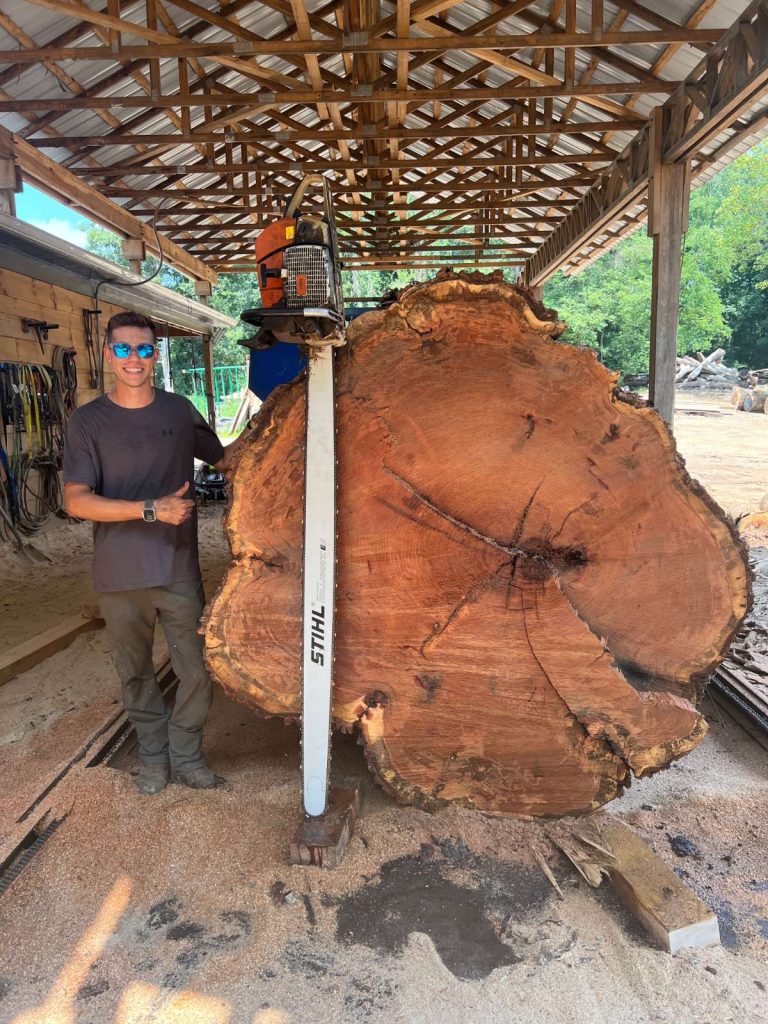
A great table starts with a great log. We often work with large hardwood logs that come from local tree services, including trees removed because of age, disease, storm damage, or necessary clearing. These logs would otherwise be cut up, discarded, or turned into firewood, but many contain incredible material for furniture.
We specialize in large-format logs, often over 36 inches in diameter. Wider logs allow us to create substantial slabs with strong visual character, dramatic grain, and the kind of scale needed for dining tables, conference tables, bar tops, counters, and statement pieces.
When choosing a log, we look at the wood species, size, shape, figure, defects, and potential yield. Not every log is right for furniture. Some may have too much rot, internal stress, or structural damage. Others may reveal beautiful figure, spalting, curl, or natural openings that can become part of the finished design.
Milling the Slabs
Once the right log is selected, it is cut into slabs. This is where the design potential starts to become visible. The way a log is milled affects the grain pattern, width, stability, and final appearance of the table.
Slabs are often cut thicker than the final table needs to be. This is intentional. As wood dries, it can move, cup, twist, or develop surface irregularities. Starting with extra thickness gives us room to flatten and surface the slab later without sacrificing the finished quality of the piece.
The milling stage is also where we begin thinking about how the slab may eventually be used. A wide, dramatic slab might become a dining table or conference table. A narrower slab may be ideal for a bar top, coffee table, console, shelf, or countertop. Some slabs work best on their own, while others may be book-matched or paired together for a larger design.
Air Drying and Sticker Stacking
After milling, the slabs need time to dry. Wood does not dry effectively while it is still in log form because there is not enough exposed surface area for moisture to escape. Once the log is cut into slabs, the drying process can begin.
The slabs are stacked with small strips of wood, called stickers, placed between each layer. These stickers create space for air to move around the slabs, helping moisture leave the wood more evenly. Proper stacking is important because uneven drying can lead to more movement, checking, or stress in the wood.
Air drying takes patience. A general rule is that wood can take about one year per inch of thickness to air dry, although species, thickness, climate, and storage conditions all play a role. Some species need extra care, and certain logs are best cut quickly so the drying process can begin before the material degrades.
Kiln Drying for Stability
After air drying, slabs are kiln dried to bring the moisture content down to a level suitable for indoor furniture. This is one of the most important parts of the process. Furniture wood needs to be dry enough to live in a home or commercial space without excessive movement.
Different wood species dry at different rates. Some species can move more quickly into the kiln stage, while others benefit from a longer air-drying period first. The goal is always the same: reduce moisture in a controlled way so the slab becomes more stable and reliable for furniture.
Kiln drying helps prepare the slab for the next stage of work. Once the wood reaches the proper moisture content, it can be surfaced, evaluated, repaired, and built into a finished piece.
Surfacing the Slab
After drying, the slab is surfaced to create a flat, workable face. This step removes rough saw marks, reveals the grain, and gives us a clearer view of the slab’s true character.
Surfacing is especially important with large live edge slabs because drying can introduce movement. A slab that looked flat when it was first cut may need significant flattening after drying. Using large-format surfacing equipment allows us to handle oversized pieces and prepare them for final furniture work.
Once surfaced, the slab begins to look less like raw material and more like the table it will become. The color, grain, knots, cracks, and natural features are easier to see, which helps guide the final design decisions.
Stabilizing Cracks, Voids, and Natural Features
Live edge slabs often include cracks, knots, voids, checks, and other natural details. These features are part of what makes the wood interesting, but they need to be handled correctly.
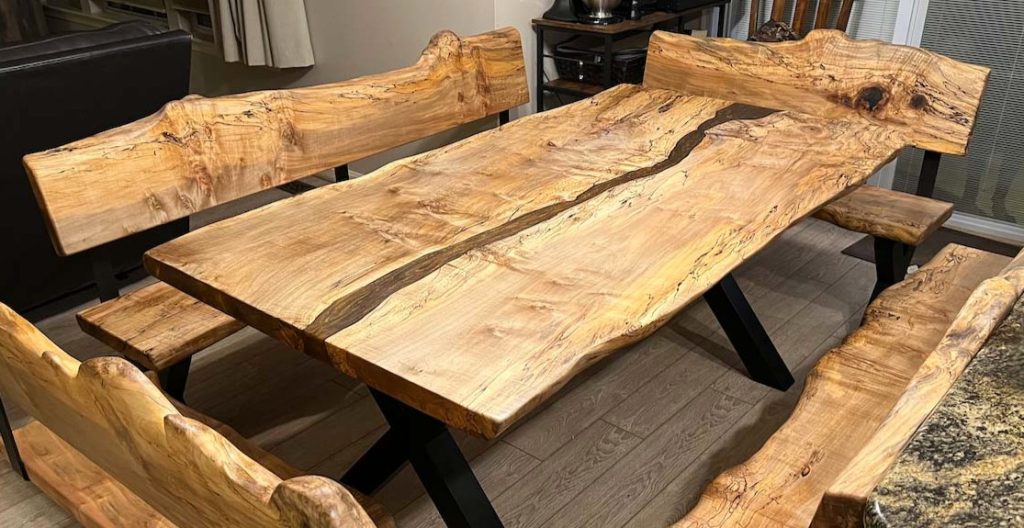
At Makers Woodshop, we often use epoxy to fill and stabilize cracks or voids. This helps reinforce the slab while preserving the character that makes it unique. Epoxy can be clear, dark, subtle, bold, or color-matched depending on the design. In many cases, the goal is not to hide the natural features, but to strengthen them and make the table more functional.
After the epoxy cures, the slab is sanded and refined again. This creates a smooth, even surface and prepares the piece for final finishing.
Refining the Live Edge
The live edge itself receives careful attention. After the bark and cambium layer are removed, the edge is cleaned, shaped, and sanded by hand. This keeps the natural movement of the tree intact while making the edge comfortable and durable.
A good live edge should feel organic, but not fragile or rough. Sharp points, loose material, and weak areas are refined so the finished table feels substantial and intentional. The best live edge pieces balance natural form with skilled craftsmanship.
Sanding and Finishing
Once the slab has been flattened, stabilized, and shaped, it moves through the sanding and finishing process. Sanding brings the surface to a smooth, refined state while preparing the wood to accept finish evenly.
The finish is what brings the depth and warmth of the wood to life. It enhances the grain, protects the surface, and gives the table a finished feel without taking away from the natural character of the slab.
At Makers Woodshop, we use a UV-cured hard wax oil finish on many of our pieces. This type of finish gives the wood a natural look and feel while helping protect it from everyday use. Instead of making the table look overly coated, the finish allows the beauty of the wood to remain the focus.
Built Around the Space
Every live edge table is different because every slab is different. The shape, width, grain, color, and natural edge all influence the final design. That is why custom work matters.
A dining table may need to seat a specific number of people. A bar top may need the right overhang, thickness, and layout for daily service. A conference table may need wire management, a refined base, and a professional presence. A countertop or kitchen island may need openings, seams, support, or a finish suited to how the space will be used.
The slab is the starting point, but the final piece is built around the client’s needs.
A Finished Piece with a Real Story
A live edge table is more than a surface. It is the result of a long process that begins with a tree and ends with a piece made for gathering, working, serving, or everyday living.
From log selection and milling to drying, surfacing, sanding, stabilizing, and finishing, every step affects the final result. When done well, the table keeps the natural beauty of the wood while becoming strong, smooth, functional, and lasting.
At Makers Woodshop, that is the heart of what we do. We take remarkable hardwood slabs and turn them into custom tables, bar tops, counters, desks, and statement pieces made to fit real spaces and real lives.
If you are ready to bring the natural beauty of live edge furniture into your home or business, we would be glad to help you choose the right slab and create a piece worth gathering around. Contact us today to get started!