There is something timeless about woodworking. Whether you are new to the craft or have been building for years, one of the first things to understand is the difference between hardwood and softwood.
Choosing the right wood matters. Different species behave differently when they are cut, shaped, sanded, stained, sealed, or used in a finished project. Some woods are dense and durable. Some are lighter and easier to work. Some resist dents and wear better, while others are better suited for construction, utility projects, or pieces where cost and workability are more important.
When you are investing in quality materials, especially live edge slabs or custom furniture wood, it helps to know whether hardwood or softwood is the better fit for your project.
Why Different Types of Wood Matter
Every tree species has its own properties, and many of those qualities remain even after the wood is cut, dried, and prepared for use. That is why the type of wood you choose can have such a big impact on the final project.
Some woods are durable and resist dents, dings, and daily wear. Others are softer and may mark more easily. Some woods are flexible and can be bent or shaped, while others are stiff, brittle, or more likely to split under pressure.
Different woods also respond differently to stain, oil, lacquer, polyurethane, hard wax oil, and other finishes. One species may take stain evenly, while another may blotch or require extra preparation. One wood may look best with a clear natural finish, while another may benefit from a darker tone.
Hardwood and softwood categories are useful, but they should be treated as general guidelines rather than absolute rules. There are softwoods that are surprisingly strong, and there are hardwoods that are relatively soft. The best choice always depends on the species and the intended use.
Defining Hardwoods
Hardwoods do not get their name simply because they are always hard. Hardwood comes from angiosperm trees, which are flowering trees that produce seeds with a covering, such as a fruit, shell, or nut. Many hardwood trees are deciduous, meaning they lose their leaves seasonally.
In general, hardwoods tend to grow more slowly than softwoods. Because of that slower growth, many hardwoods are denser and more durable, though there are exceptions. This density is one reason hardwoods are often used for fine furniture, flooring, cabinetry, millwork, tables, countertops, and long-lasting interior pieces.
Common hardwoods include:
Maple
Oak
Walnut
Cherry
Ash
Beech
Hickory
Poplar
Elm
Mahogany
Teak
Hardwoods are often chosen for furniture because they offer a strong balance of beauty, grain, durability, and long-term performance. However, not all hardwoods are equally hard. Poplar and basswood, for example, are technically hardwoods but are much softer than species like hard maple, hickory, or white oak.
Understanding Softwoods
Softwoods come from gymnosperm trees, which usually produce seeds in cones. These trees are often conifers, such as pine, cedar, spruce, fir, redwood, juniper, and Douglas fir. Many softwoods are evergreen, though there are exceptions.
Softwoods are used in a wide variety of applications, including construction lumber, framing, plywood, fiberboard, paper products, exterior siding, trim, and some furniture. They generally grow faster than hardwoods, which often makes them more available and more affordable.
Common softwoods include:
Pine
Cedar
Spruce
Fir
Douglas fir
Redwood
Juniper
Hemlock
Softwoods can be easier to cut, shape, and work with, which makes them useful for many building and woodworking projects. However, many softwoods are less dense than common furniture hardwoods, so they may dent, scratch, or wear more easily in high-use applications.
That does not mean softwoods are low quality. Cedar, redwood, and Douglas fir can be excellent choices when used in the right setting. The key is matching the wood to the project.
The Care and Keeping of Hardwoods and Softwoods
Both hardwoods and softwoods can produce beautiful projects, but they may require different expectations and maintenance.
Softwoods often have the advantage of being more affordable and easier to work. They can be a good choice for construction projects, rustic furniture, shelving, outdoor features, trim, and pieces where budget or workability is a major factor.
Hardwoods tend to be chosen when durability, long-term use, and fine furniture quality are more important. A dining table, bar top, countertop, desk, floor, or heirloom furniture piece will often benefit from the strength and density of a good hardwood.
If a project will see heavy use, frequent cleaning, spills, impact, or daily wear, hardwood may be the better choice. If the project is decorative, temporary, rustic, painted, or cost-sensitive, softwood may be perfectly suitable.
The important thing is not simply whether the wood is hardwood or softwood. The better question is whether that species fits the use, environment, finish, budget, and maintenance expectations of the project.
What to Ask When Choosing Between Hardwood and Softwood
Before selecting lumber, slabs, or material for a woodworking project, it helps to ask a few practical questions.
How much wear and tear will the finished piece receive?
Will the wood be used indoors or outdoors?
Does the project need to resist dents, scratches, spills, or heavy use?
Will the wood be stained, painted, oiled, sealed, or left more natural?
Does the species take finish well?
Will the wood need to be cut, shaped, bent, carved, joined, or flattened?
Is the project structural, decorative, or functional?
What level of maintenance are you willing to do over time?
Does the budget allow for the best species, or is a more affordable option needed?
Do you have the tools, equipment, and experience needed to work with that material properly?
These questions matter because the wrong wood can make a project harder, less durable, or more expensive in the long run. A poorly chosen softwood may wear out quickly in a high-traffic application, while an expensive hardwood may be unnecessary for a simple painted utility project.
Hardwood vs. Softwood for Furniture
For custom furniture, hardwood is often the preferred choice. Tables, desks, counters, bar tops, benches, and shelves all benefit from woods that offer strength, stability, and attractive grain.
Walnut is prized for its rich color and premium feel. Maple is clean, light, and strong. Oak and ash offer bold grain and durability. Cherry brings warmth and develops a deeper patina over time. Elm adds dramatic movement and character.
Softwoods can still be used for furniture, especially rustic, farmhouse, painted, or outdoor-inspired pieces. Pine, cedar, and fir can all work well when the design and finish match the material. However, they may show dents and wear more quickly than many hardwoods.
For a piece that is meant to last for decades, hardwood is usually the stronger choice.
Hardwood vs. Softwood for Live Edge Slabs
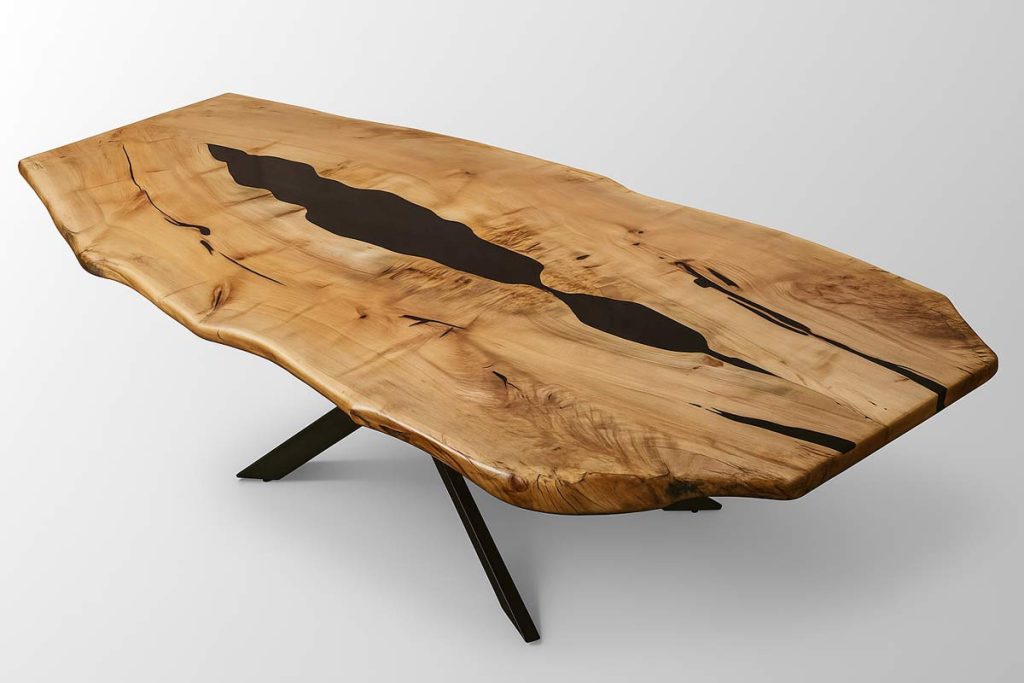
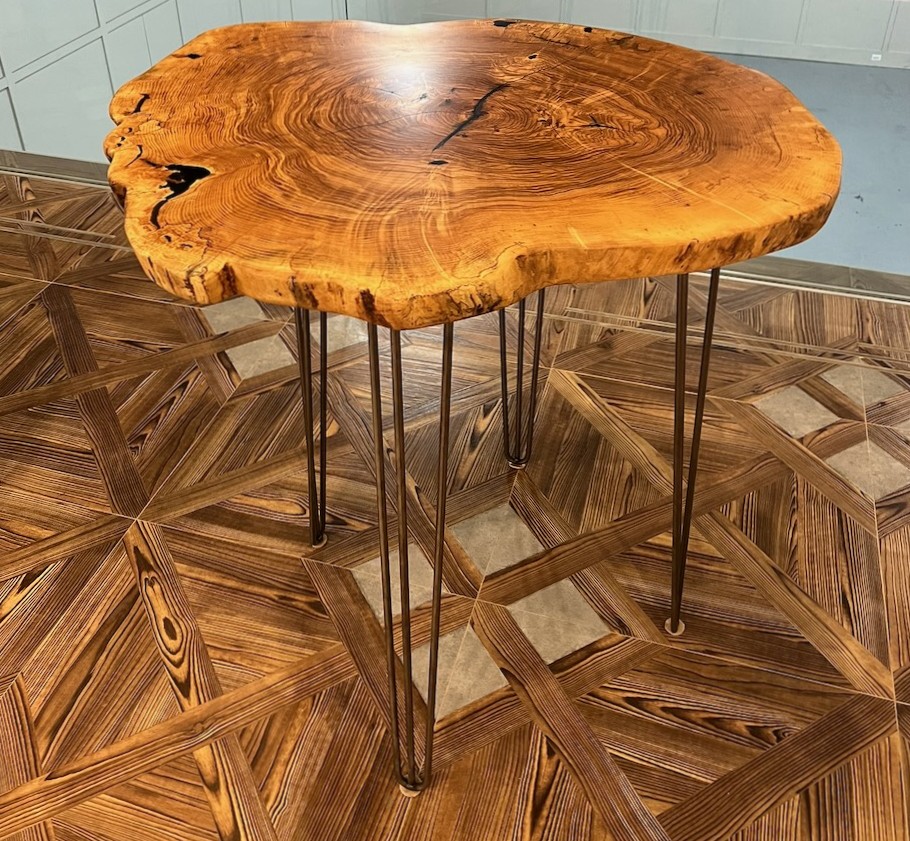
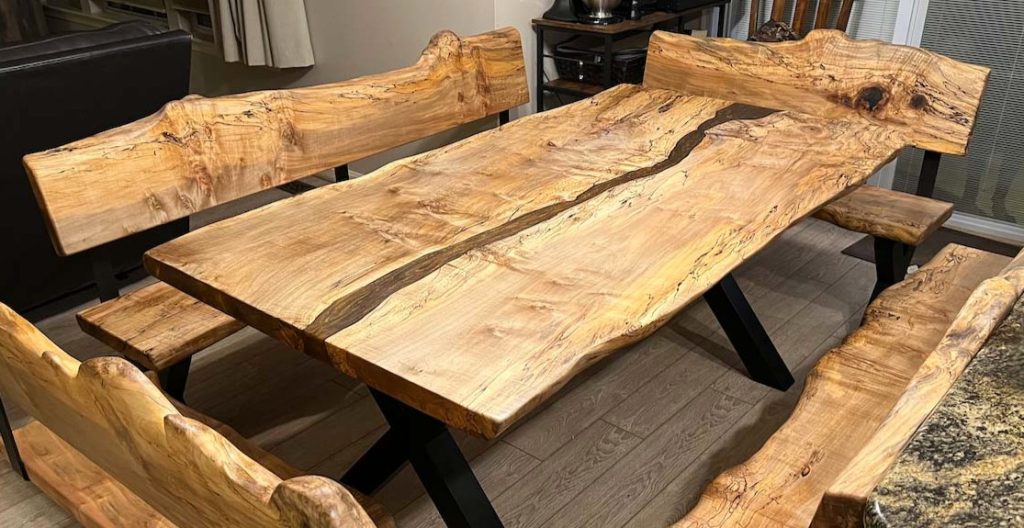
Live edge slabs are most commonly made from hardwoods because large hardwood slabs often provide the strength, grain, color, and durability customers want in a finished table or bar top.
Walnut, maple, cherry, ash, elm, oak, sycamore, and similar species are popular choices for live edge furniture because they combine natural beauty with good furniture performance.
Softwood live edge pieces can still be beautiful, especially when using cedar, cypress, pine, or redwood. These woods can create rustic, aromatic, outdoor, or cabin-style pieces. However, softer slabs may require more care depending on how the finished piece will be used.
A softwood slab may be perfect for a mantel, wall feature, decorative table, or rustic accent piece. A hardwood slab is usually better for a heavily used dining table, conference table, bar top, or countertop.
Which One Should You Choose?
Choose hardwood when you want strength, durability, long-term furniture quality, and a refined finished surface. It is usually the better choice for dining tables, bar tops, countertops, desks, shelves, flooring, cabinetry, and heirloom furniture.
Choose softwood when you want affordability, easier workability, rustic character, or material for construction, framing, outdoor-inspired pieces, painted projects, or decorative applications.
Neither category is automatically better. The best wood is the one that matches the project.
A softwood used in the right place can perform beautifully. A hardwood used in the wrong application can still fail if it is poorly dried, poorly finished, or not maintained properly.
Final Thoughts
Understanding hardwood versus softwood is an important first step in choosing the right material for a woodworking project. Hardwoods generally come from flowering, broadleaf trees and are often used for fine furniture and durable surfaces. Softwoods usually come from conifers and are widely used in construction, utility projects, exterior applications, and some furniture.
The most important thing is to think beyond the label. Consider the species, density, grain, finish, durability, cost, workability, and how the finished piece will be used.
When you choose the right wood from the beginning, your project is more likely to look beautiful, perform well, and last for years.
Ready to Get Started?
If you are planning a custom table, live edge slab project, bar top, countertop, mantel, shelf, desk, or furniture piece, contact Makers Woodshop today. We can help you choose the right wood species and design a piece that fits your project, your space, and your style.