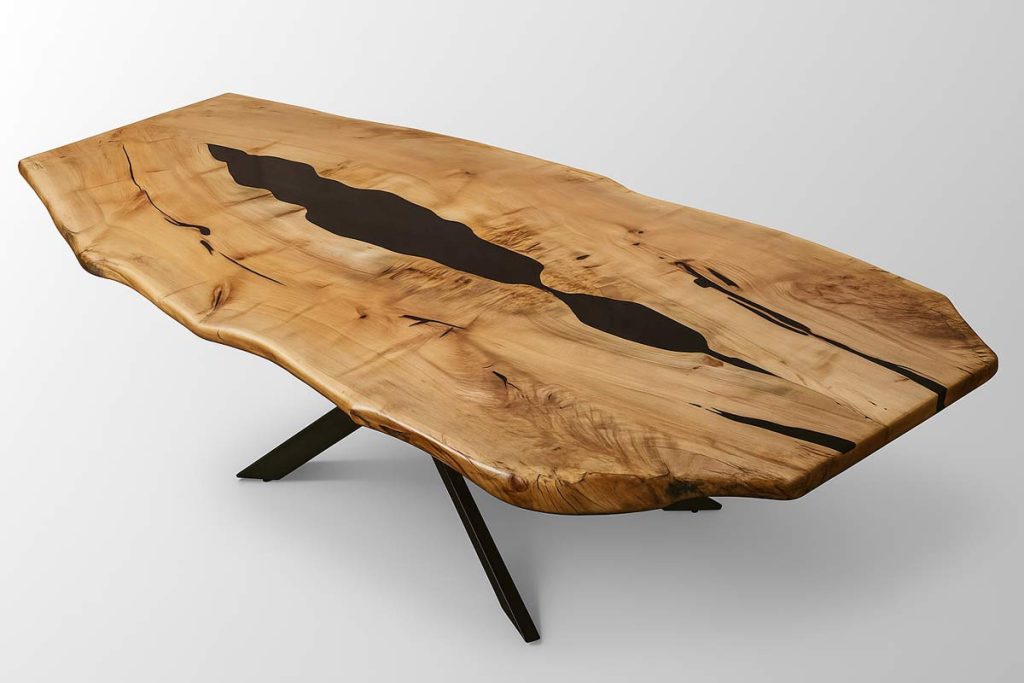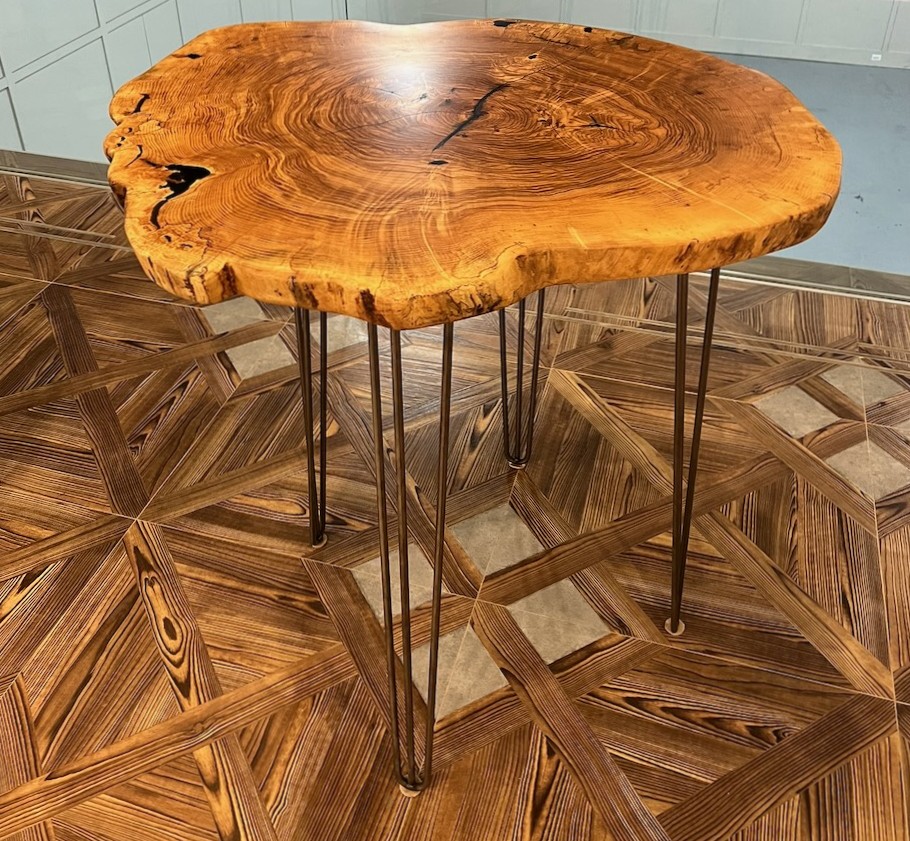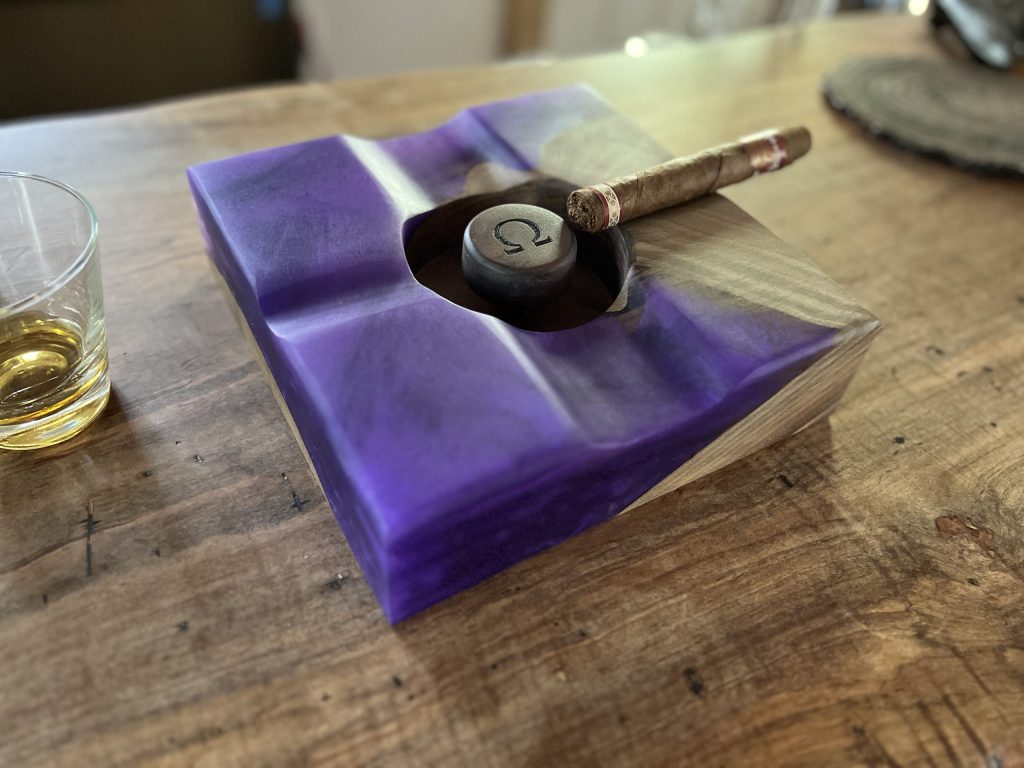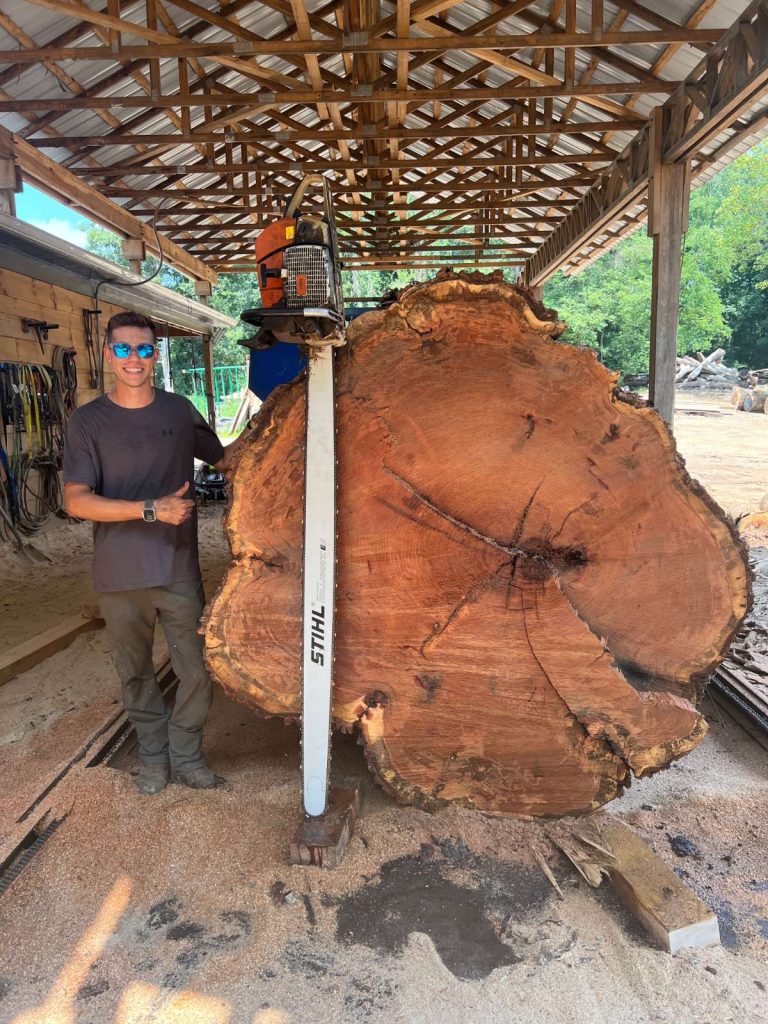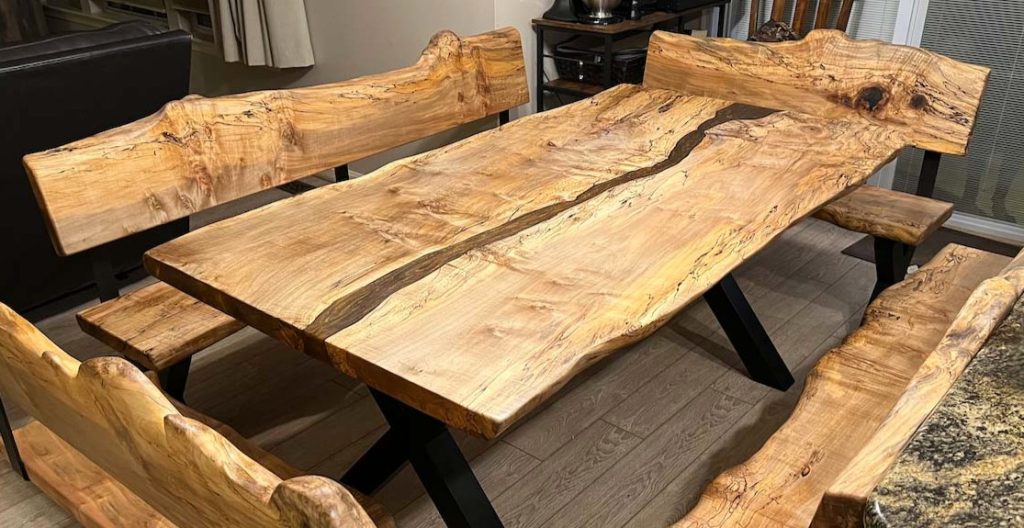


When you are designing a custom live edge table, bar top, countertop, or kitchen island, the wood species you choose has a major impact on the final look and feel of the piece. Color, grain movement, hardness, figure, natural edge shape, and overall character all vary from one species to another.
At Makers Woodshop, we work with a wide variety of hardwoods and specialty slabs, many of which are milled, dried, surfaced, and finished in-house. That gives each client the opportunity to choose a piece of wood that fits not only the size of the project, but also the style of the room, the level of character desired, and the way the finished piece will be used.
 Black Walnut: Rich, Refined, and Timeless
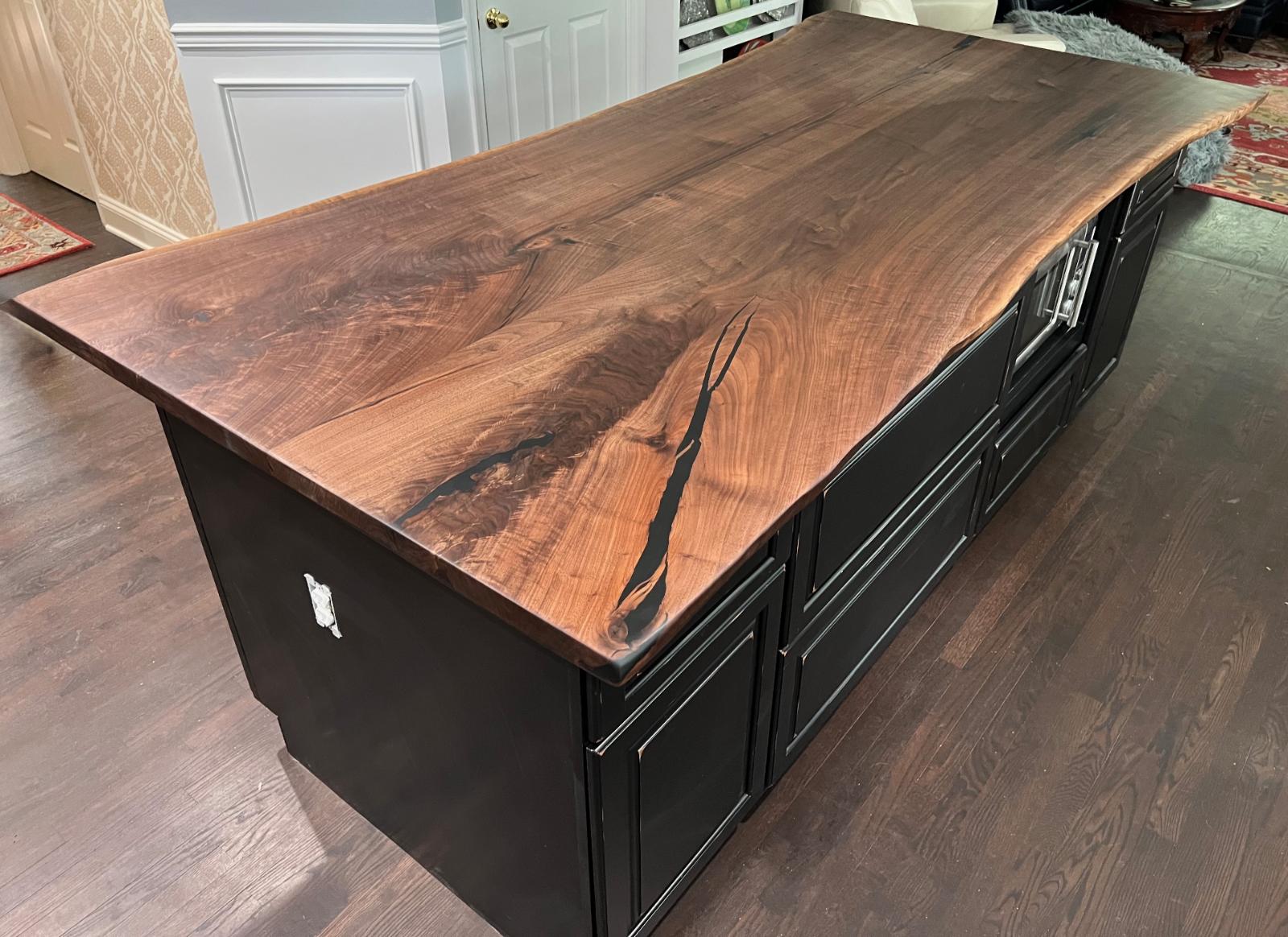
Black walnut is one of the most sought-after woods for custom live edge tables, bars, and countertops. Its natural color can range from lighter brown to deep chocolate brown, often with darker streaks and occasional gray, purple, or reddish undertones. It can also include dramatic figure such as curl, crotch grain, or burl, making it especially well-suited for statement pieces.
Walnut has a refined, high-end look without needing much embellishment. It works beautifully in modern, rustic, transitional, and luxury interiors, and it is especially strong for dining tables, conference tables, executive desks, and bar tops where the wood itself should be the focal point. Black walnut is also known for good working properties and dimensional stability, which helps make it a favorite among furniture makers.
 Oak: Strong, Classic, and Full of Character
Oak is a classic choice for live edge furniture because it combines strength, durability, and a familiar warmth that works in many different spaces. White oak and red oak both offer strong grain patterns, but they have different personalities. White oak tends to have a light to medium brown tone, often with an olive cast, and quartersawn pieces can show beautiful ray fleck patterns. It is also rated highly for decay resistance, which makes it especially appealing for pieces that need a strong, durable, long-lasting feel. Red oak is usually a little warmer or redder in tone, with a bold open grain and strong visual texture. It is popular, widely available, and works well for furniture, cabinetry, flooring, and interior millwork. For a live edge table, oak is a great option when you want a piece that feels substantial, traditional, architectural, or slightly rustic. It can also be finished in a range of tones, from natural and light to darker, more dramatic looks.
 English Walnut: Elegant, Warm, and Distinctive
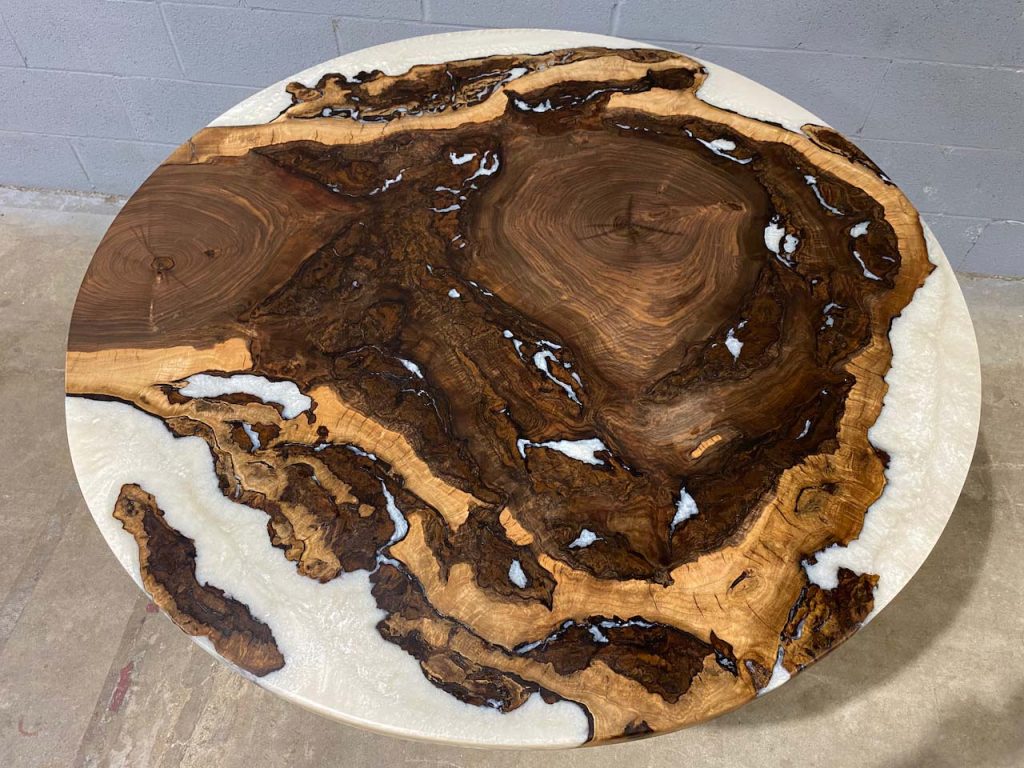
English walnut, also known as European walnut, has a softer and often more varied appearance than black walnut. Its heartwood can range from pale brown to darker chocolate brown, sometimes with gray, purple, or reddish casts. Figured pieces may include curl, crotch, or burl, giving the wood a refined and highly decorative quality.
This species is an excellent choice for clients who want the richness of walnut but with a slightly more European, heirloom, or old-world feel. It can feel elegant without being overly dark, and it works beautifully in dining tables, desks, accent pieces, and smaller statement tops where the color variation and figure can be fully appreciated. English walnut is typically more expensive and less commonly available in wide solid slabs than many domestic hardwoods.
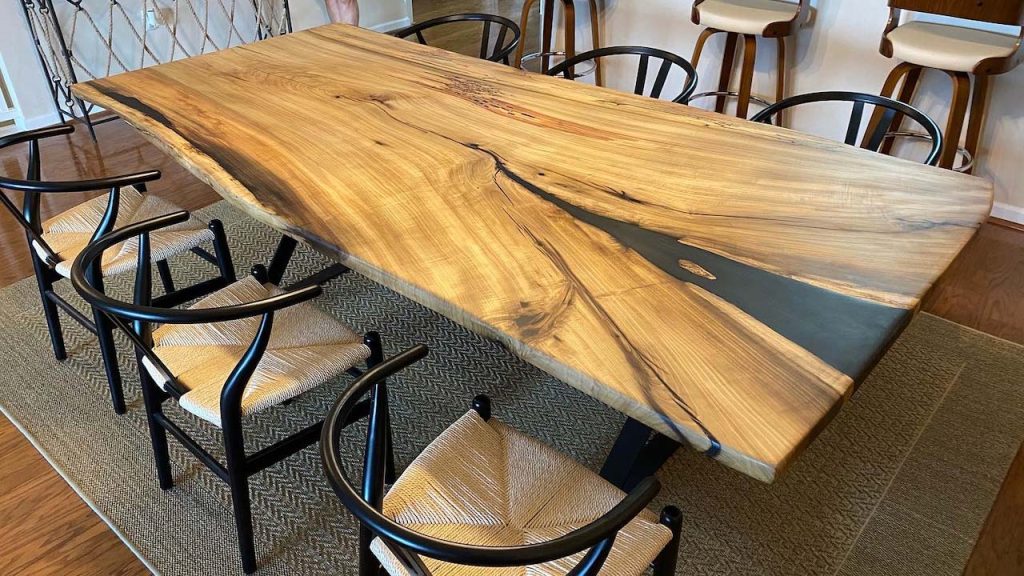 Tulip Poplar: Light, Bright, and Surprisingly Expressive
Tulip poplar, often called yellow poplar, is a lighter domestic hardwood with a clean, approachable appearance. Its heartwood is usually light cream to yellowish brown, but it can also include gray, green, red, purple, or yellow mineral streaking. When those colors are especially pronounced, it is sometimes referred to as rainbow poplar.
For live edge work, poplar is best when the slab has strong natural color, unusual mineral staining, or an interesting edge. It is softer than many premium table woods, so it may not be the first choice for a heavily used dining table unless the right finish and design expectations are in place. However, it can be a beautiful option for accent tables, wall art, counters with lighter use, or epoxy pieces where its bright tones and color streaks can create a dramatic contrast.
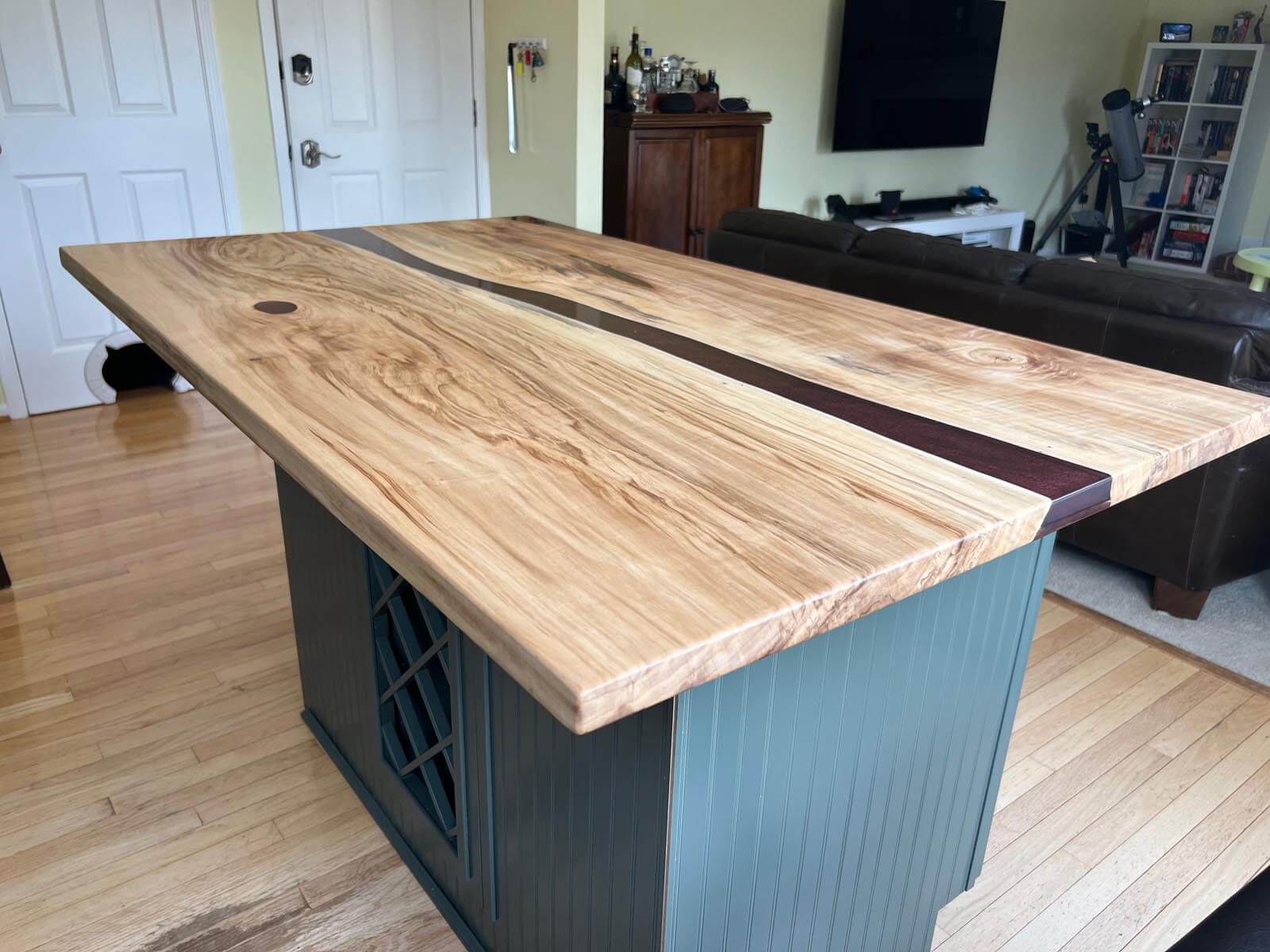 Cottonwood: Soft, Rustic, and Full of Natural Texture
Cottonwood is technically a hardwood, but it is relatively soft, lightweight, and more rustic in character than species like walnut, oak, maple, or ash. Its heartwood is generally light brown, while the sapwood ranges from pale yellow to nearly white. The grain is usually straight to slightly irregular or interlocked, with a uniform medium texture.
Cottonwood can be a great choice when the goal is a large-format slab with a softer, more relaxed, organic look. It is not usually selected for its hardness or premium furniture reputation, but it can offer beautiful scale, movement, and natural character, especially in epoxy tables or pieces where cracks, voids, and edge movement become part of the design.
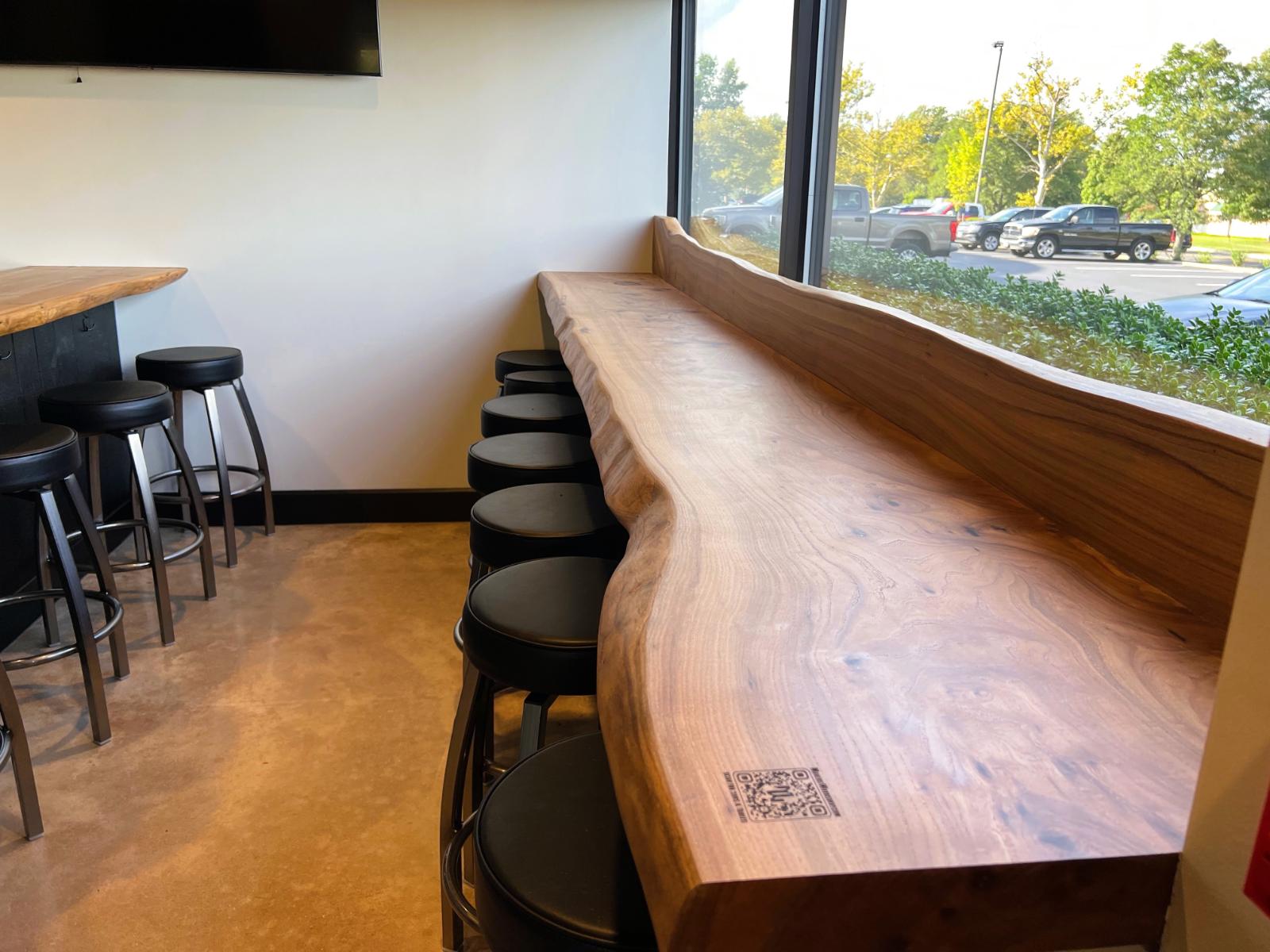 Elm: Distinctive Grain with Warm, Architectural Movement
Elm is a beautiful option for live edge tables and bar tops because of its distinctive grain and warm reddish-brown tones. American elm typically has light to medium reddish-brown heartwood with paler sapwood. Its interlocked grain gives it a unique visual movement and makes the wood resistant to splitting.
That interlocked grain can make elm more challenging to work, especially during surfacing and planing, but it is also what gives the wood so much character. Elm can be an excellent choice for large tables, bar tops, and statement pieces where the surface should feel active, bold, and slightly unconventional.
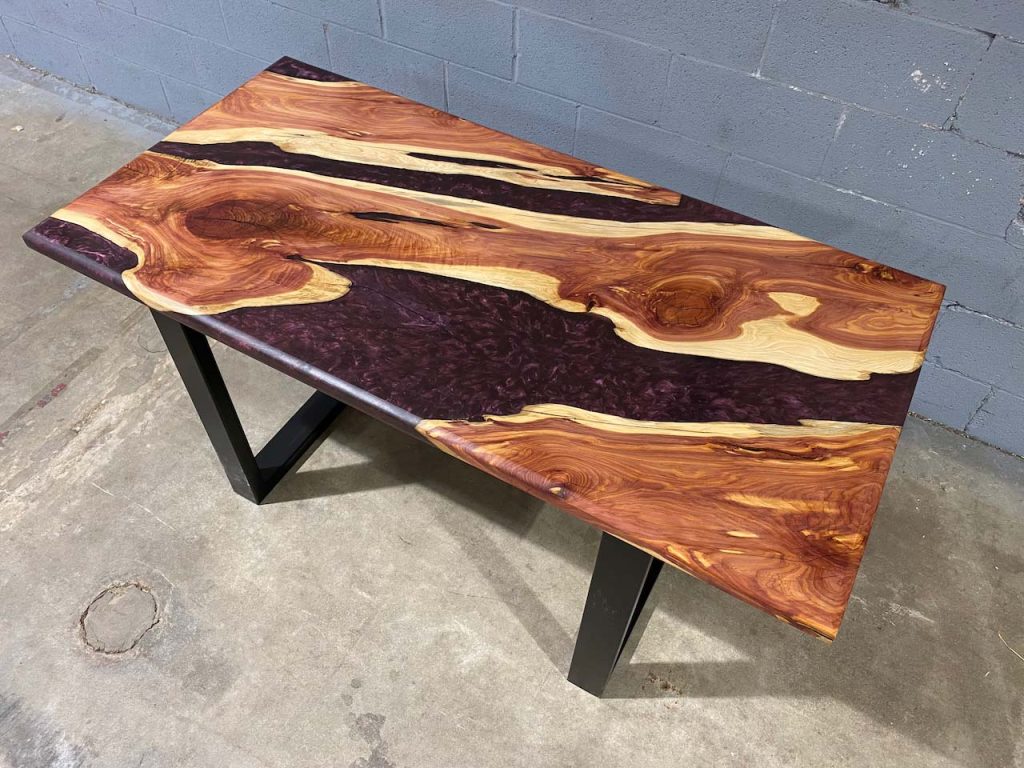 Red Cedar: Aromatic, Colorful, and Naturally Rustic
Eastern red cedar, also called aromatic red cedar, is known for its strong fragrance, reddish to violet-brown heartwood, pale yellow sapwood, and frequent streaking. It often includes knots and color contrast, which gives it a rustic, highly recognizable appearance.
Cedar can be a striking choice for accent pieces, outdoor-style furniture, specialty tables, and projects where aroma, color, and natural character are part of the appeal. It is also known for strong decay and insect resistance.
 Cypress: Subtle, Weather-Resistant, and Naturally Warm
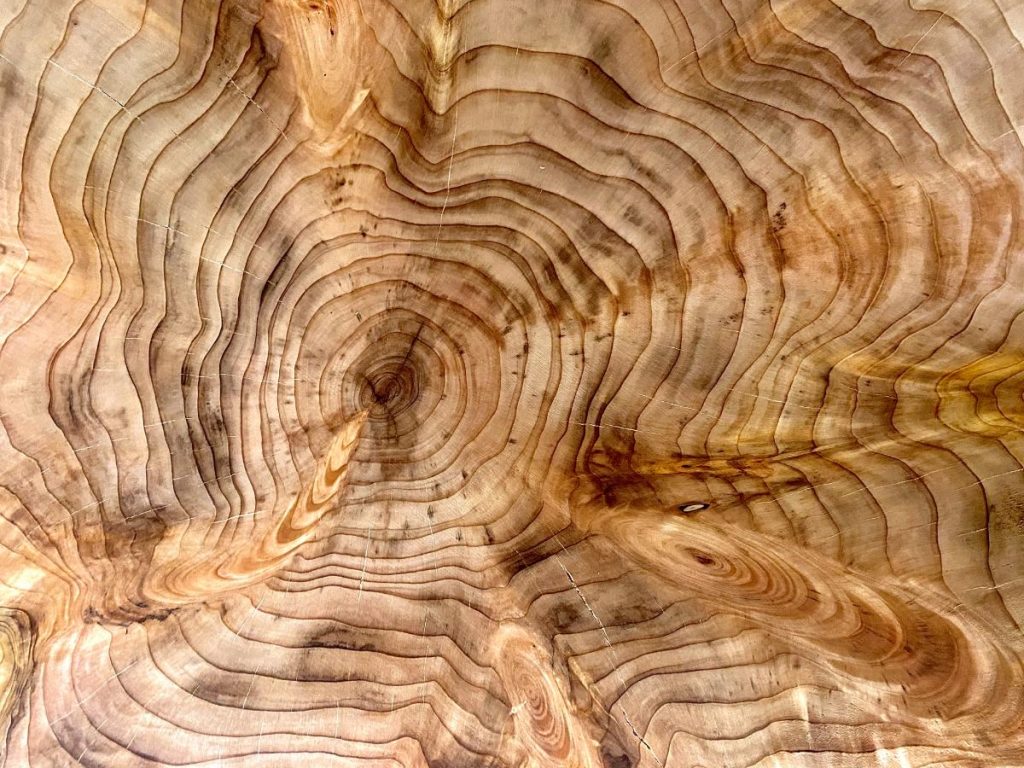
Cypress has a light yellowish-brown tone, nearly white sapwood, and a straight grain with medium to coarse texture. Some pieces include darker pockets or voids known as pecky cypress, while old-growth or sinker cypress can have warmer, darker heartwood.
Cypress is a strong option for clients who want a softer, lighter, more relaxed wood with natural charm. Old-growth bald cypress is known for strong decay resistance, while younger-growth material is generally considered more moderately durable. This makes cypress especially appealing for certain indoor/outdoor aesthetics, rustic tables, counters, and specialty projects where the wood’s calm color and weathered character fit the design.
 Maple: Clean, Light, and Modern
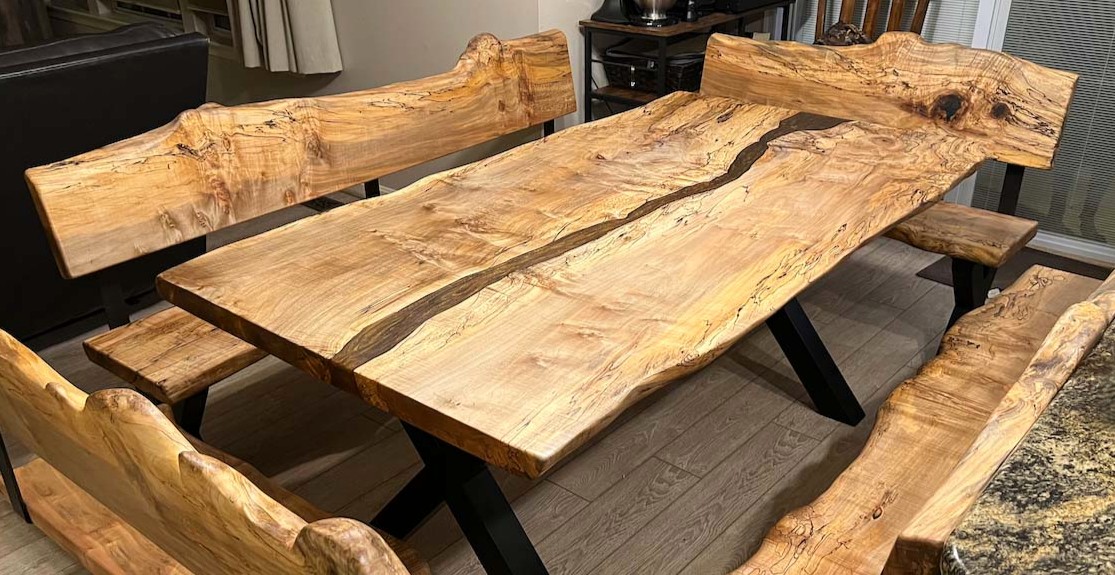
Maple is one of the best choices when you want a clean, bright, refined surface. Its sapwood ranges from nearly white to creamy off-white, sometimes with reddish or golden undertones. Maple grain is usually straight, though curly, quilted, and birds-eye figure can appear in special boards.
Maple works especially well in modern interiors, lighter kitchens, contemporary dining spaces, desks, and bar tops where the goal is a clean and polished look. It is harder and denser than many domestic hardwoods, making it a strong choice for pieces that need durability. The lighter color also makes it a great contrast wood when paired with darker species, epoxy, metal bases, or modern design details.
 Ash: Bold Grain, Strength, and Natural Energy
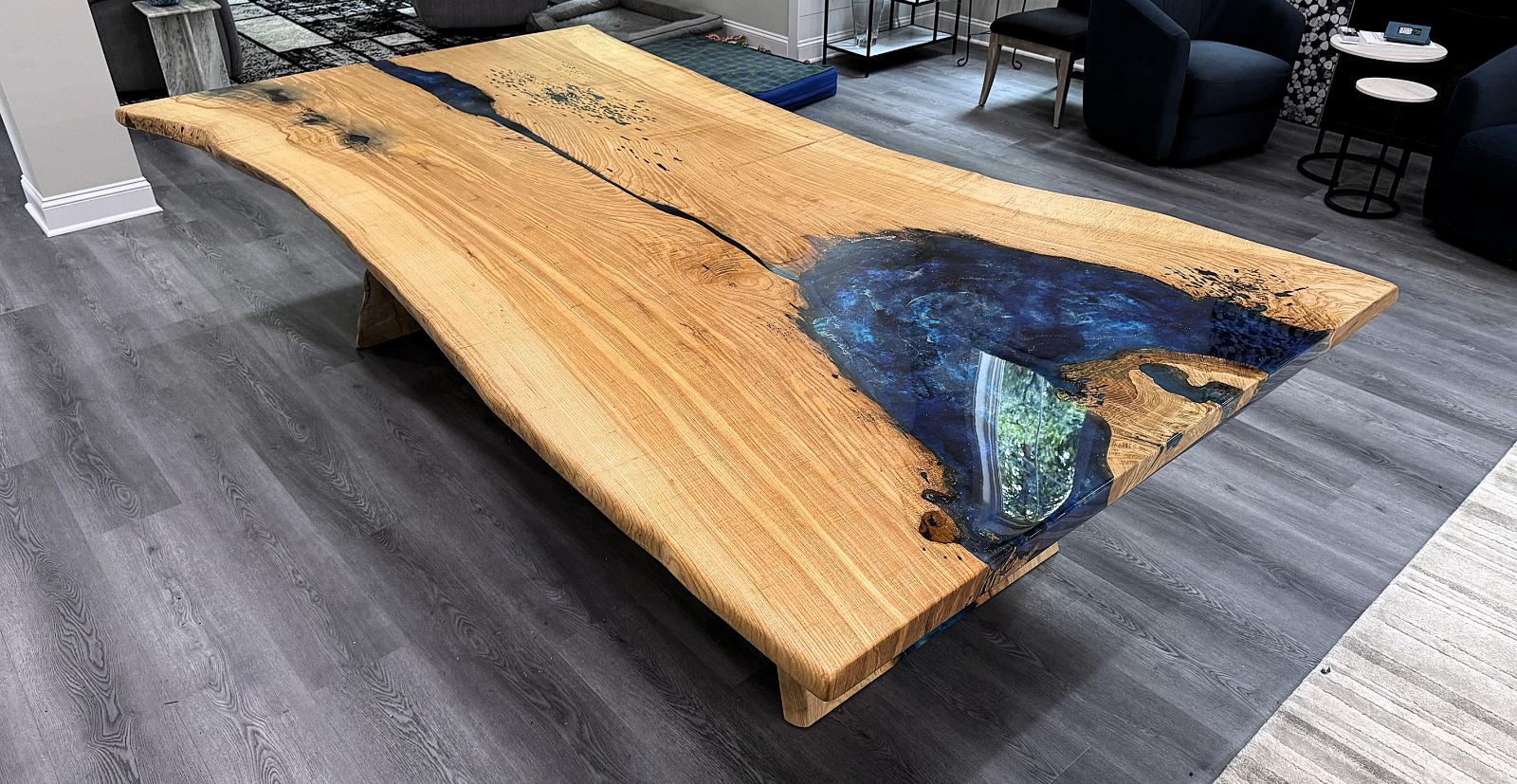
Ash has a light to medium brown color, often with wide beige or light brown sapwood. Its grain is usually straight and regular, with a medium to coarse texture similar to oak. It is strong, tough, and known for excellent shock resistance, which is why it has traditionally been used for tool handles and baseball bats.
For live edge furniture, ash is a great option when you want a bold grain pattern without the darker tone of walnut. It can feel clean and modern when finished naturally, or more dramatic when stained. Ash also works well for large tables, bar tops, and commercial pieces where strength and visual movement are important.
 Boxelder: Colorful, Unusual, and Full of Personality
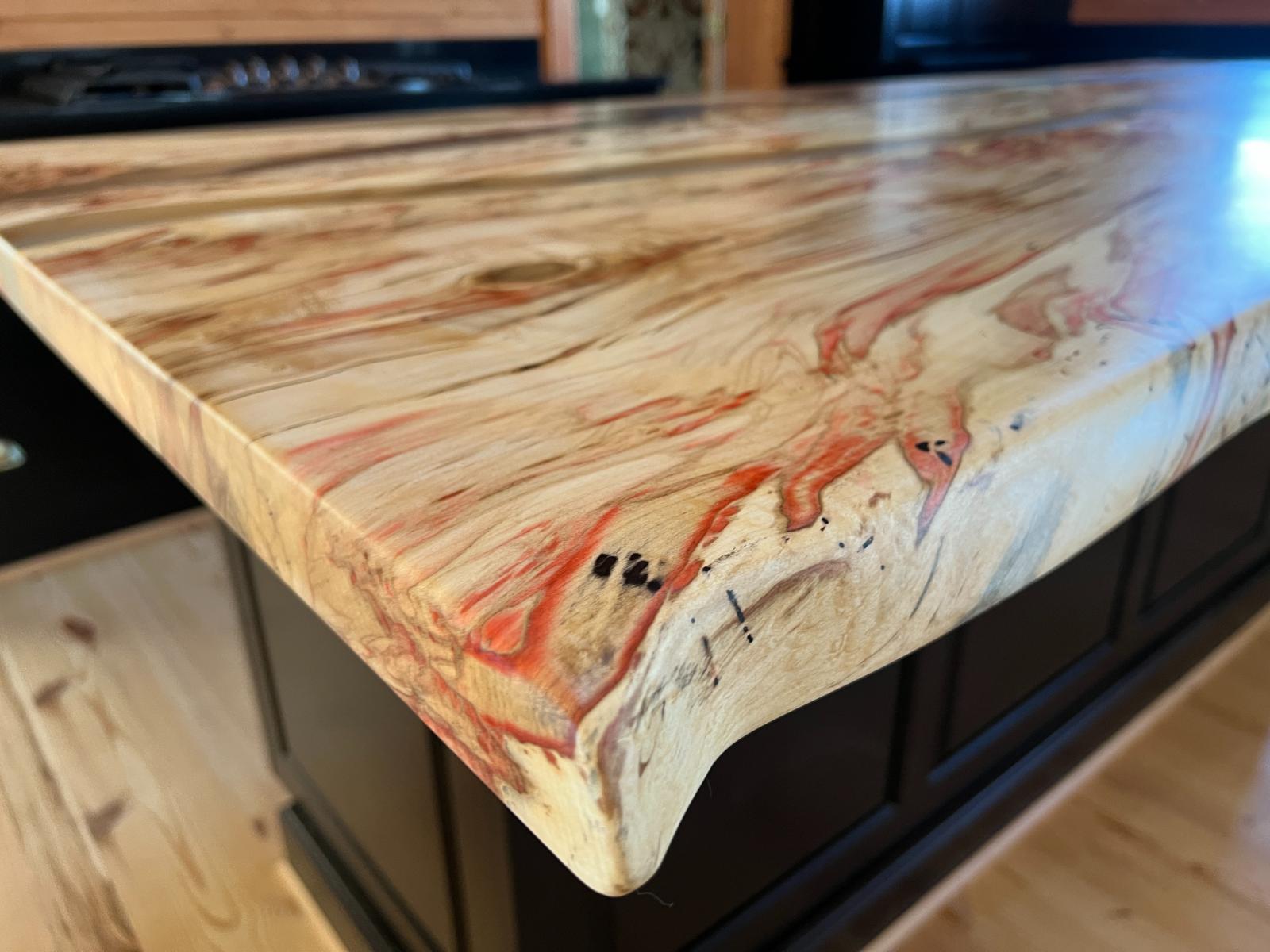
Boxelder is one of the more unique species for live edge furniture. It is technically a maple, but it is softer, lighter, and less structurally strong than hard maple. Its sapwood is usually pale white with possible yellow or green undertones, while the heartwood can include grayish or yellowish-brown tones with red or pink streaking.
Those red or pink streaks are what make boxelder so visually memorable. In the right slab, boxelder can create a bold, artistic, almost painterly effect. It is a strong choice for accent tables, epoxy pieces, wall art, coffee tables, and statement projects where color and character matter more than traditional hardness. Because the vivid color can mellow over time, it is best used in projects where its natural variation is part of the appeal.
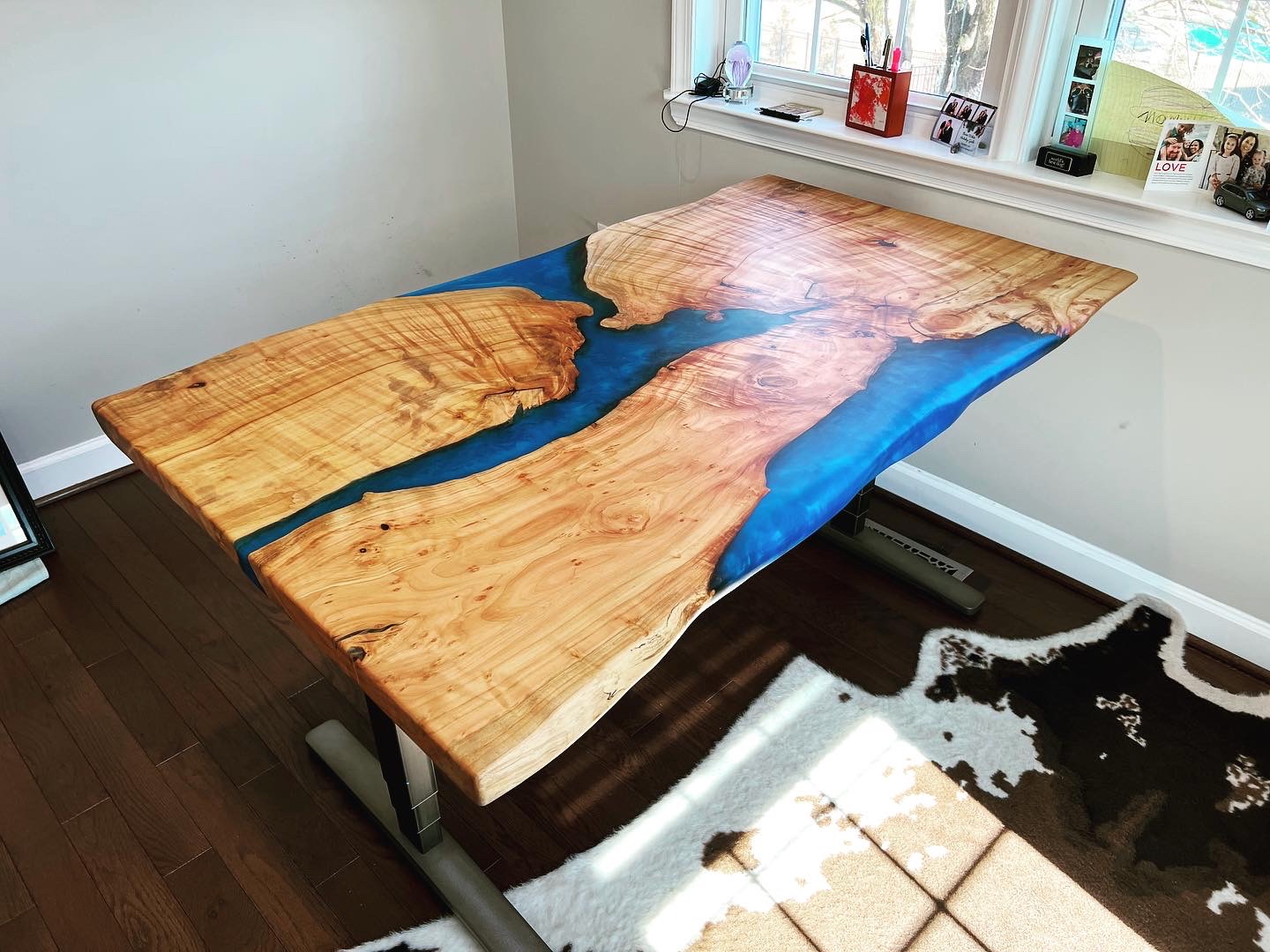 Cherry: Warm, Classic, and Only Gets Better with Age
Cherry is one of the most timeless American furniture woods. Freshly cut cherry starts as a light pinkish brown and darkens over time into a richer medium reddish brown as it is exposed to light. Its grain is usually straight, fine, and even, though figured cherry can include curl or other movement.
Cherry is ideal for clients who want warmth, elegance, and a piece that develops more depth as it ages. It works beautifully for dining tables, desks, counters, coffee tables, and heirloom-style furniture. It is also considered one of the best all-around domestic hardwoods for workability, making it a strong choice for refined custom furniture.
Selecting the Perfect Wood for Your Live Edge Table
The best wood species depends on the look, use, and personality you want from the finished piece. Black walnut is ideal for a rich, premium statement. Oak offers strength and classic grain. Maple feels clean and modern. Cherry brings warmth and ages beautifully. Ash gives bold grain and durability. Elm adds movement and character. Boxelder creates a colorful, artistic look. Cypress and cedar bring a more rustic, natural feel.
For a dining table or conference table, durability, size, grain, and long-term stability are especially important. For a bar top or countertop, finish durability, spill resistance, thickness, support, and daily use matter just as much as appearance. For a coffee table, wall art, or decorative piece, unusual color, edge movement, cracks, voids, and epoxy features may become the most important part of the design.
At Makers Woodshop, we help clients choose the right slab based on the way the piece will be used, the atmosphere of the space, and the natural character of the wood itself. Whether you are drawn to the deep richness of walnut, the strength of oak, the glow of cherry, or the one-of-a-kind color of boxelder, the right species can turn a custom live edge piece into something that feels personal, lasting, and worth gathering around. Contact us to get started!