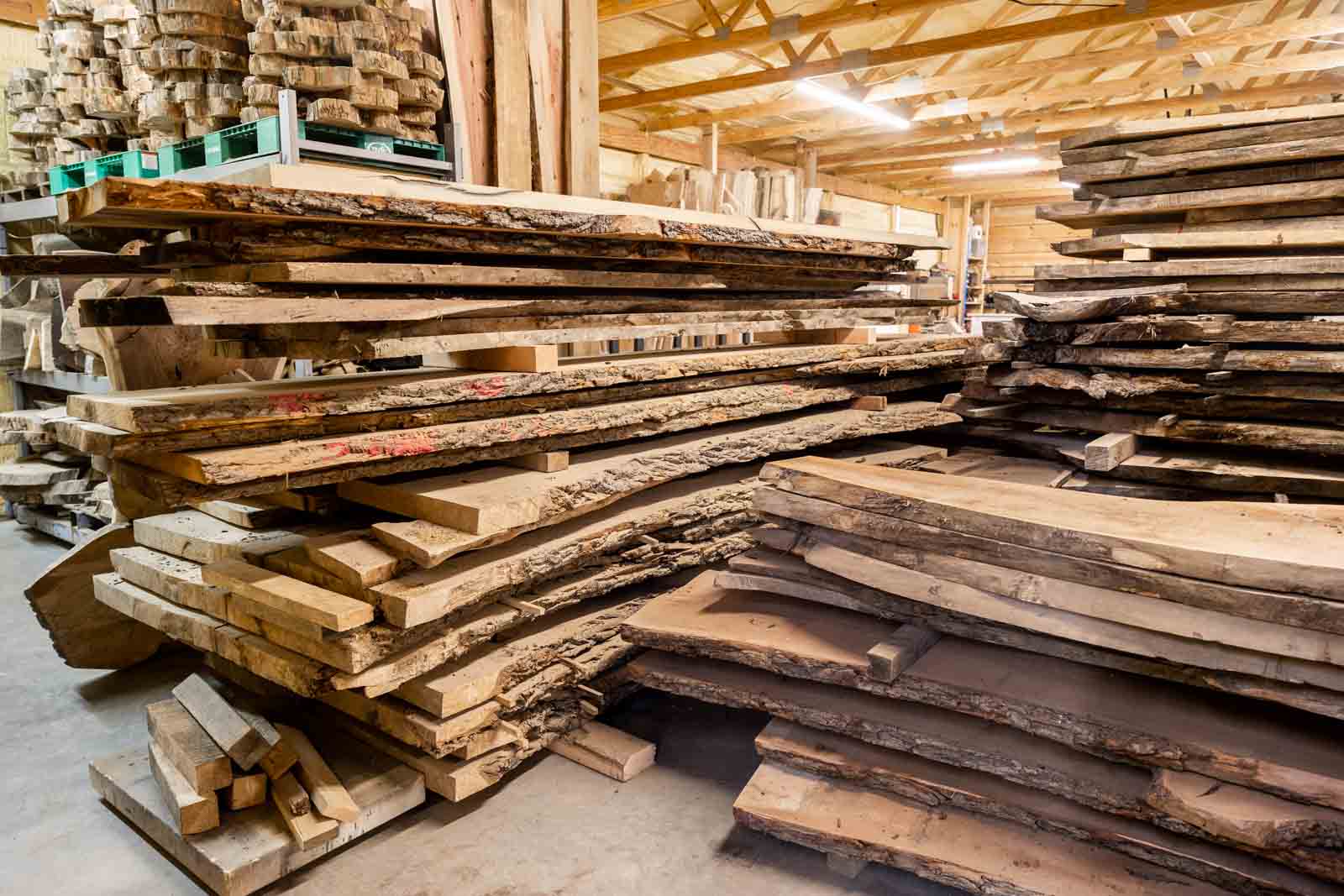
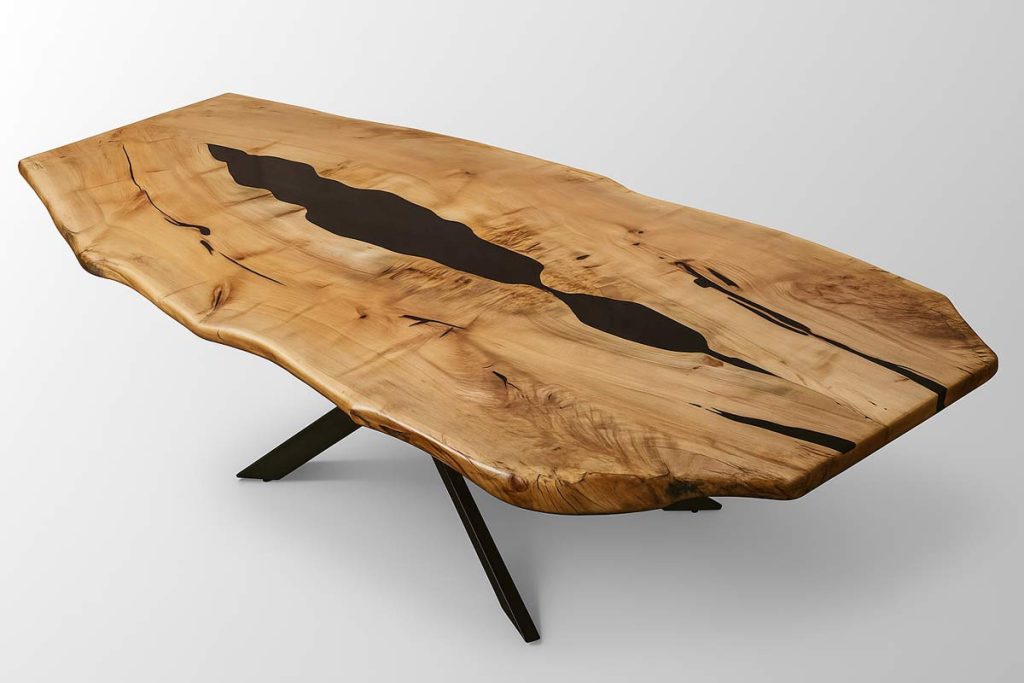
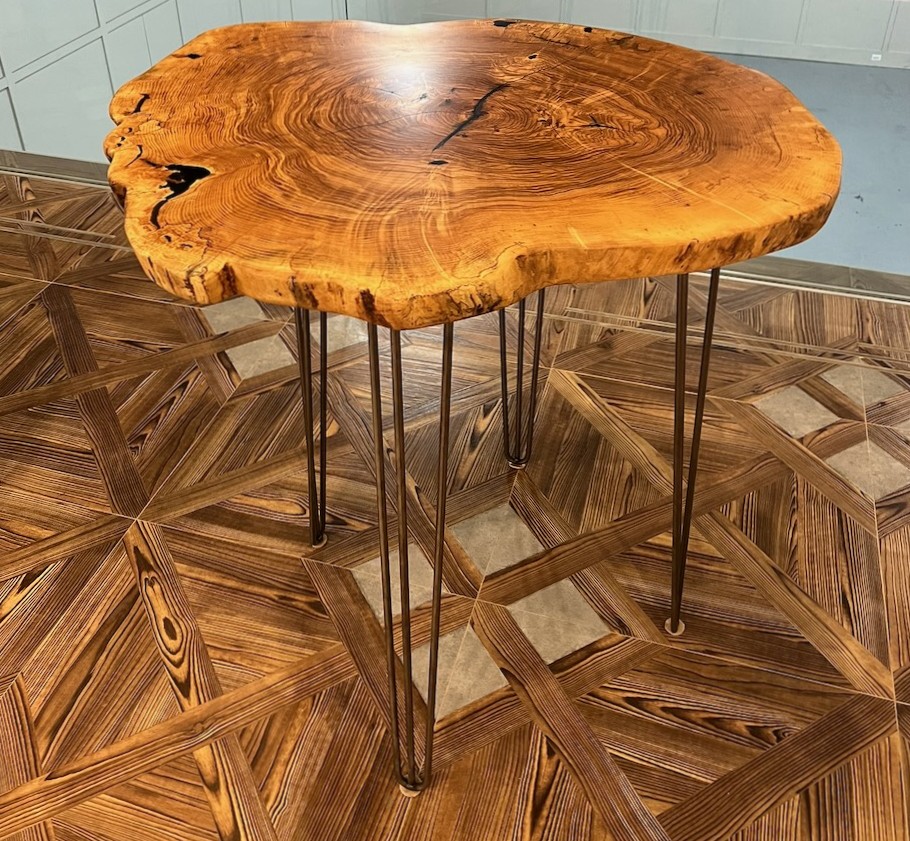
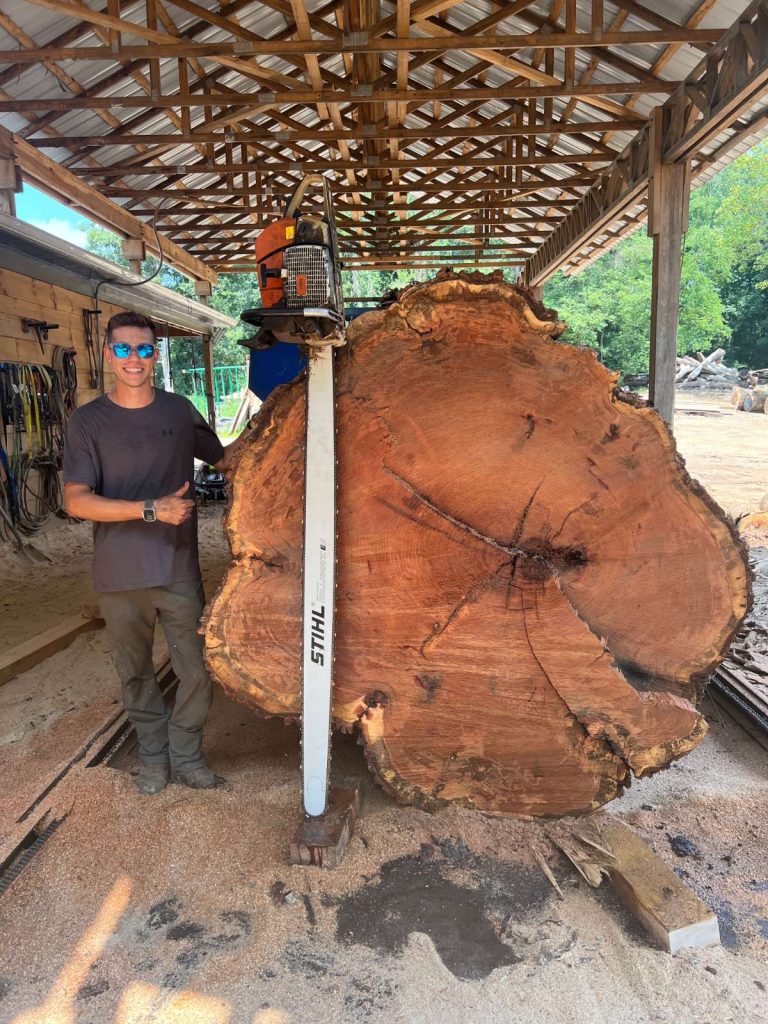
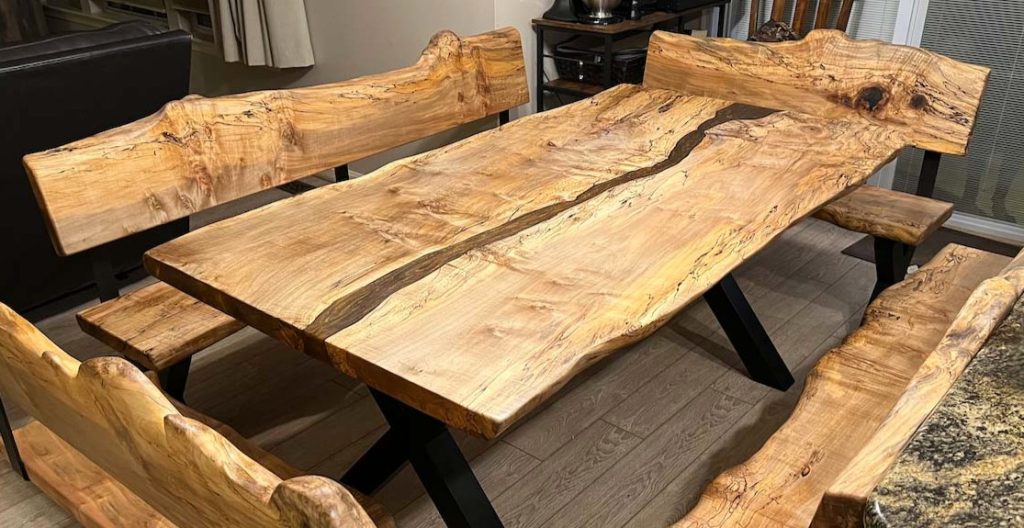
Live edge wood is lumber that keeps the natural outer edge of the tree instead of cutting every side into a straight, uniform line. That natural edge may include curves, waves, knots, color changes, bark lines, and other details that show the original shape and character of the tree.
Because no two trees grow the same way, no two live edge pieces are ever exactly alike. That is what makes live edge tables, bars, coffee tables, counters, mantels, and desks so distinctive. The finished piece still functions like fine furniture, but it carries the natural story of the tree it came from.
At Makers Woodshop, our live edge work begins with locally sourced Maryland hardwood. The lumber is milled, dried, surfaced, designed, and finished by our team, giving each piece a connection to the region and a look that cannot be duplicated by mass-produced furniture.
What Makes Live Edge Furniture Different?
Most furniture is built from lumber that has been cut into straight boards with square edges. Live edge furniture keeps part of the tree’s original form visible. Instead of hiding the natural shape of the wood, the design highlights it.
That natural edge can make a piece feel rustic, modern, refined, or dramatic depending on the wood species, base design, finish, and overall layout. A black walnut live edge table with a steel base may feel modern and high-end, while a thick oak or maple slab can feel warm, bold, and traditional.
Live edge furniture works well in homes, restaurants, breweries, offices, hotels, and commercial spaces because it creates an immediate focal point. It is furniture that people notice, gather around, and remember.
Can the Bark Stay on Live Edge Wood?
In some cases, the bark can be left on a live edge slab, but it depends on the species, condition of the bark, and how the piece will be used. Bark can look beautiful, but it may loosen over time if it is not naturally secure or properly stabilized.
For high-use pieces like dining tables, bar tops, kitchen islands, counters, and desks, the bark is often removed so the edge can be cleaned, shaped, sanded, and finished for long-term durability. Removing the bark still preserves the natural live edge shape while making the piece easier to maintain.
Why Is Live Edge Furniture So Popular?
Live edge furniture has become popular because it blends natural beauty with practical design. Each piece has movement, grain, color, and shape that cannot be copied. It gives a room a custom element that feels warmer and more personal than standard factory-made furniture.
It is also versatile. Live edge wood can fit into rustic, industrial, modern, farmhouse, traditional, and luxury spaces depending on how it is designed. The same slab can feel completely different with a black steel base, a wood trestle base, a waterfall edge, epoxy accents, or a clean modern finish.
For many people, the appeal is also in the story. A live edge table made from a Maryland tree has a sense of place. It is not just another piece of furniture. It is a piece of local hardwood given a second life.
How Much Does Live Edge Wood Cost?
The cost of live edge wood and live edge furniture can vary widely. A raw slab may cost far less than a fully finished custom table, bar, or island. The final price depends on several factors, including the wood species, slab size, thickness, drying process, design complexity, base style, finish, and installation needs.
A simple live edge coffee table will usually cost much less than a large dining table, conference table, or commercial bar top. Pieces with epoxy, custom metalwork, book-matched slabs, complex joinery, or special installation requirements will also increase the price.
In general, live edge furniture costs more than standard mass-produced furniture because each piece is selected, milled, dried, surfaced, designed, and finished for a specific project. You are not buying a repeated factory item. You are commissioning a custom piece built around the wood itself.
How to Choose the Right Live Edge Piece
When choosing a live edge table, bar, counter, or mantel, start with the space. Measure the area carefully and think about how the piece will be used every day. A dining table needs enough room for chairs and movement. A bar top needs the right depth, overhang, and durability. A mantel or shelf needs the right thickness, mounting method, and proportion.
Next, consider the wood species. Walnut, maple, oak, cherry, ash, elm, and other hardwoods all have different colors, grain patterns, hardness levels, and overall character. Some species feel bold and dramatic, while others are lighter, cleaner, or more subtle.
You should also think about the edge itself. Some live edges are smooth and gentle, while others are wild, curved, and dramatic. The right choice depends on whether you want the wood to quietly complement the room or become the main focal point.
Finally, set a realistic budget. Live edge furniture can range from simple and affordable to highly custom and investment-level. Knowing your size, species preference, design style, and budget early helps narrow the options and create a better finished piece.
Is Live Edge Furniture Right for Your Home or Business?
Live edge furniture is a strong choice if you want a piece with natural character, local story, and long-term presence. It works well for dining rooms, kitchens, offices, restaurants, breweries, hotels, retail spaces, and gathering areas where the furniture should do more than simply fill a space.
Whether you are looking for a dining table, custom bar top, kitchen island, mantel, coffee table, desk, or conference table, live edge wood offers a way to bring natural Maryland hardwood into the spaces where people gather, work, and live.
If you are considering a live edge piece, Makers Woodshop can help you choose the right slab, species, size, design, and finish for your project.
Contact Makers Woodshop today to start your custom live edge table, bar, counter, mantel, or furniture project.