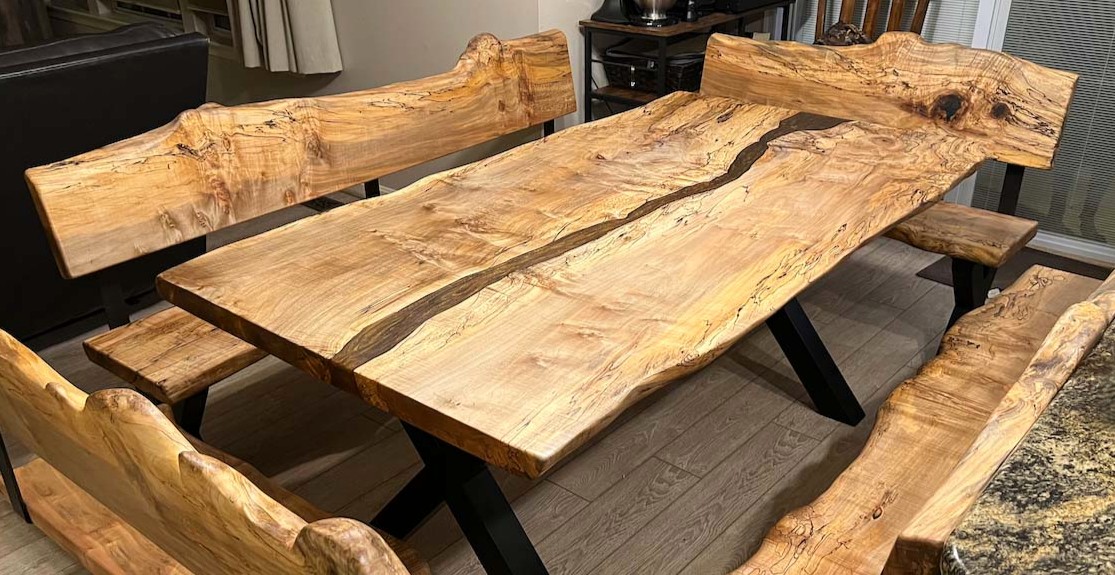
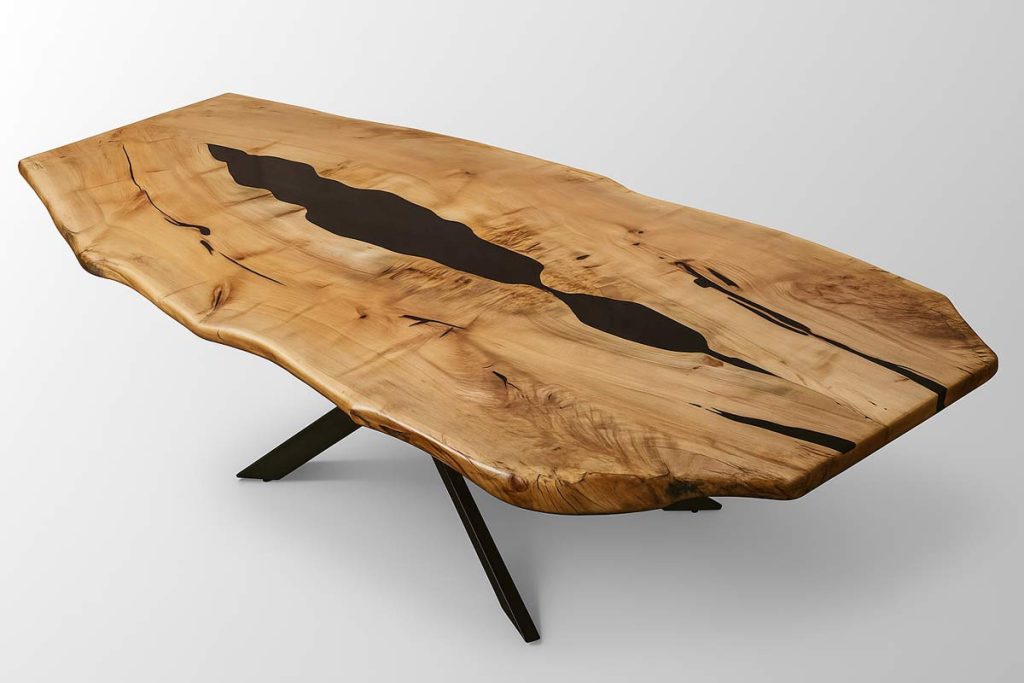
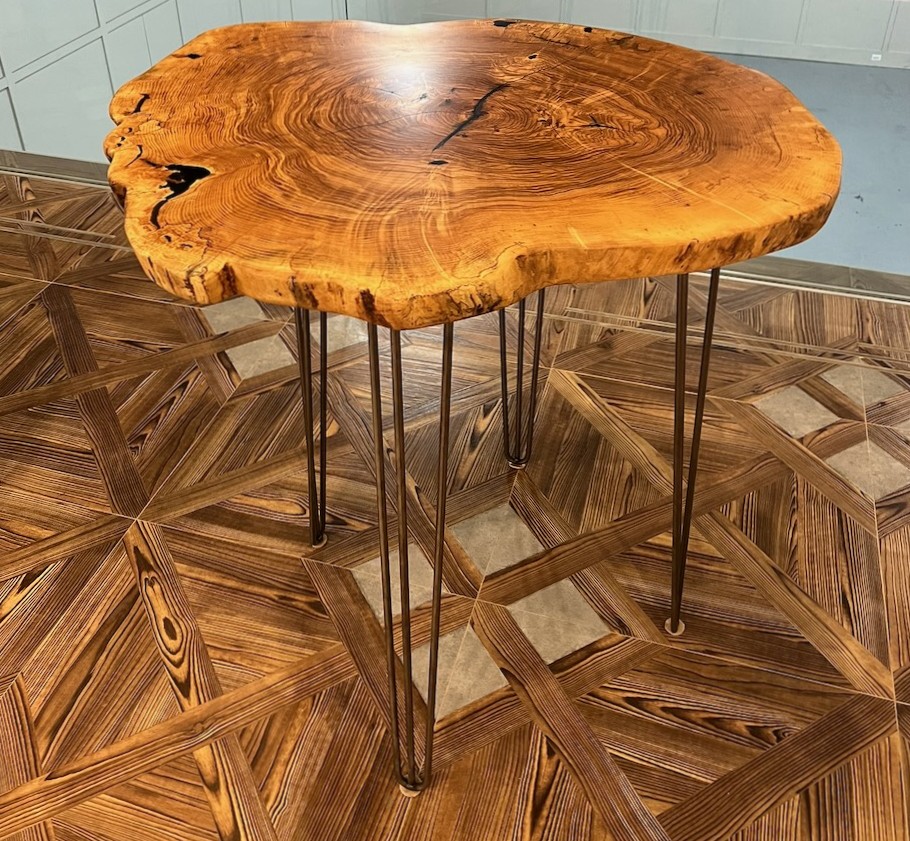
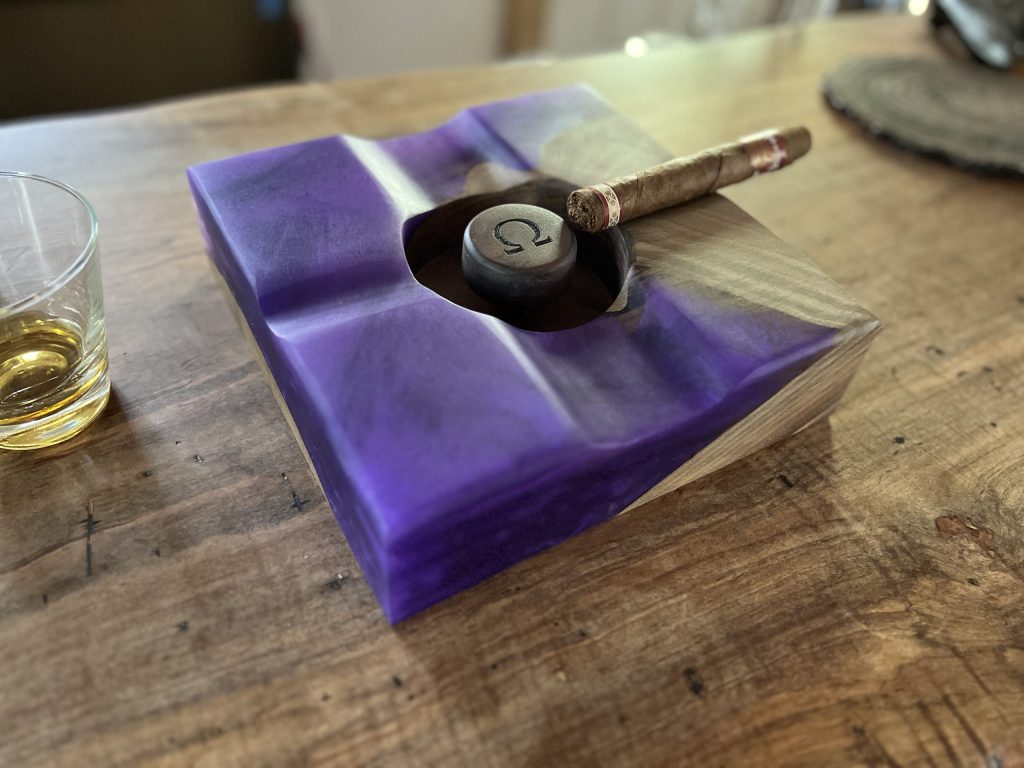
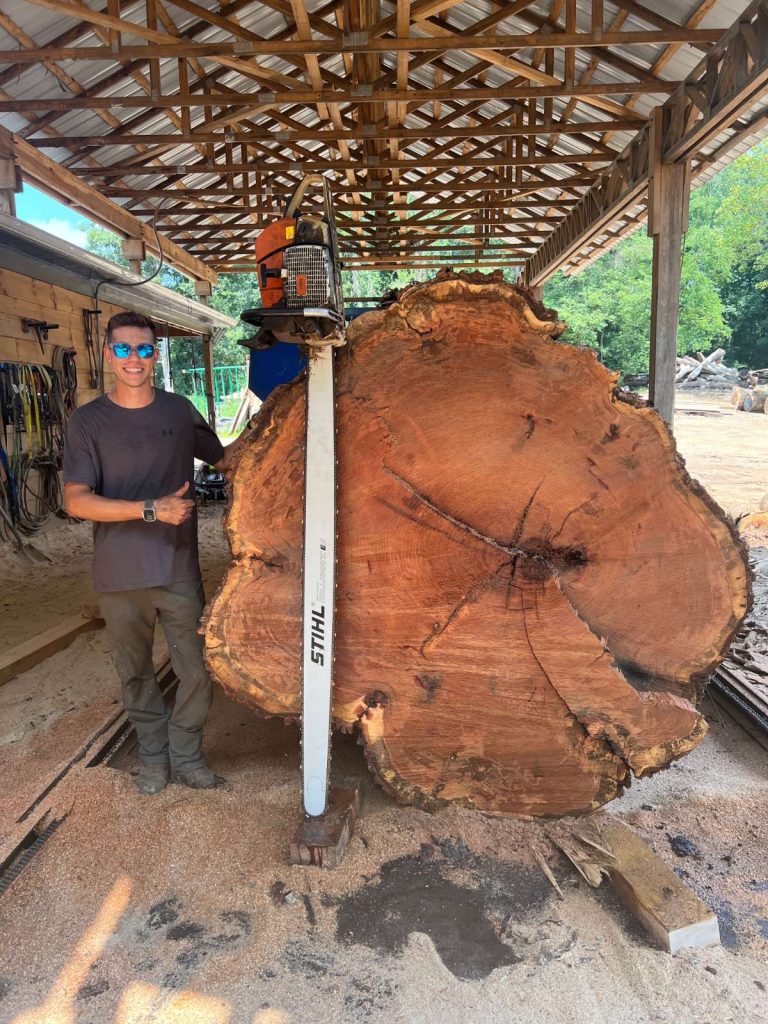
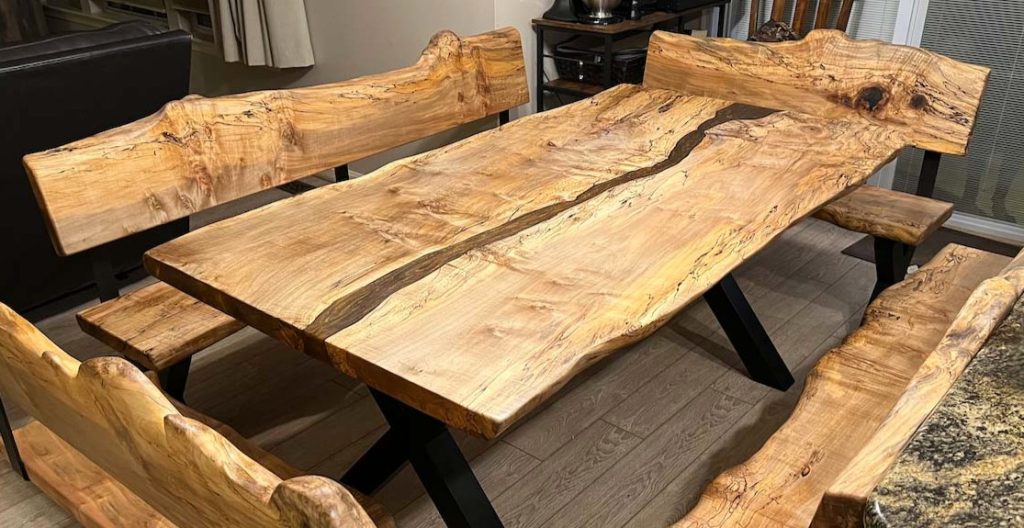
Live edge tables are a unique and beautiful choice for custom furniture. Not only do they make a stunning statement, but they also bring the natural beauty of the outdoors into your home or business. With their organic edges, rich grain, and rustic charm, live edge tables have become increasingly popular in recent years.
But what exactly is a live edge table, and what should you consider before choosing one for your space?
Why Are Live Edge Tables So Sought After?
A live edge table is made from wood that keeps its natural shape and edge intact. Instead of cutting the slab into perfectly straight lines, the natural outside edge of the tree is preserved and incorporated into the finished design.
This means no two live edge tables are exactly alike. Each slab has its own shape, grain pattern, knots, color variation, and natural movement. The finished piece can feel sleek and modern, warm and rustic, or bold and organic depending on the wood species, finish, and base style.
That versatility is one of the reasons live edge tables work so well in many different spaces. They can complement traditional homes, modern interiors, restaurants, offices, conference rooms, and custom gathering spaces.
What Types of Wood Are Used for Live Edge Tables?
Live edge tables can be made from many different wood species, each with its own look and personality. Common options include walnut, cherry, maple, oak, elm, ash, cedar, poplar, sycamore, and other domestic hardwoods.
Walnut is often chosen for its rich chocolate-brown color and premium feel. Cherry brings warmth and deepens beautifully with age. Maple offers a clean, light, modern look. Oak and ash provide bold grain and strong character. Elm adds dramatic grain movement, while poplar and boxelder can bring unusual color and artistic variation.
You do not always have to choose just one look. Some live edge projects use book-matched slabs, epoxy details, contrasting wood tones, or custom base designs to create a more personal finished piece.
What Should You Consider When Choosing a Live Edge Table?
When choosing a live edge table, there are several important factors to think through before making a final decision.
First, consider the size. Do you need a smaller table for two to four people, or a larger table for family gatherings, entertaining, or commercial use? The table should fit the room comfortably while still allowing enough space for chairs, walking paths, and daily use.
Next, think about the finish. Some people prefer a lighter, natural finish that keeps the wood looking bright and organic. Others prefer a darker stain or deeper tone for a richer, more dramatic appearance.
The shape of the slab also matters. Some live edge tables have soft curves and gentle movement, while others have more dramatic edges, large openings, knots, or natural voids. The shape should match both your style and the practical needs of the room.
Finally, consider the cost. Pricing can vary depending on the species, size, thickness, slab quality, finish, base design, and amount of custom work involved. A live edge table is a long-term piece, so it is worth choosing one that fits your space, your budget, and your personal taste.
Ultimately, choosing a live edge table comes down to finding the piece that speaks to you. Take time to look at different slabs, wood species, finishes, and base options until you find the right combination.
How Should You Care for a Live Edge Table?
Once you have chosen the right live edge table, proper care will help keep it looking beautiful for years.
Dust the surface regularly with a soft cloth to remove dirt and debris. Avoid harsh cleaners or abrasive pads, which can damage the finish. For everyday cleaning, a gentle wipe with a soft, lightly damp cloth is usually enough.
It is also a good idea to protect the table from excessive moisture, extreme heat, and long periods of direct sunlight. Too much sun exposure can cause certain woods to fade or change color over time, especially species like walnut and cherry.
Use coasters, placemats, or trivets when needed, especially for drinks, hot dishes, or anything that could scratch or stain the surface. Adding felt pads under table legs can also help protect floors when the table is moved or adjusted.
Depending on the finish, the table may benefit from occasional maintenance or refreshing to keep the surface looking vibrant and protected.
Final Thoughts
A live edge table is more than just a piece of furniture. It is a one-of-a-kind statement piece shaped by the natural character of the tree itself. From the wood species and slab shape to the finish, base, and final size, every choice affects how the finished table will look and feel in your space.
Whether you are looking for a dining table, bar top, conference table, desk, coffee table, or custom slab project, choosing the right live edge piece starts with understanding your options.
If you are looking for a custom live edge table, bar top, or raw slab for your next project, contact us today. We can help you choose the right wood and create a piece that fits your home, business, and style.