
Want your exact number? Price your live edge table online: pick the size, species and base and see every line item.
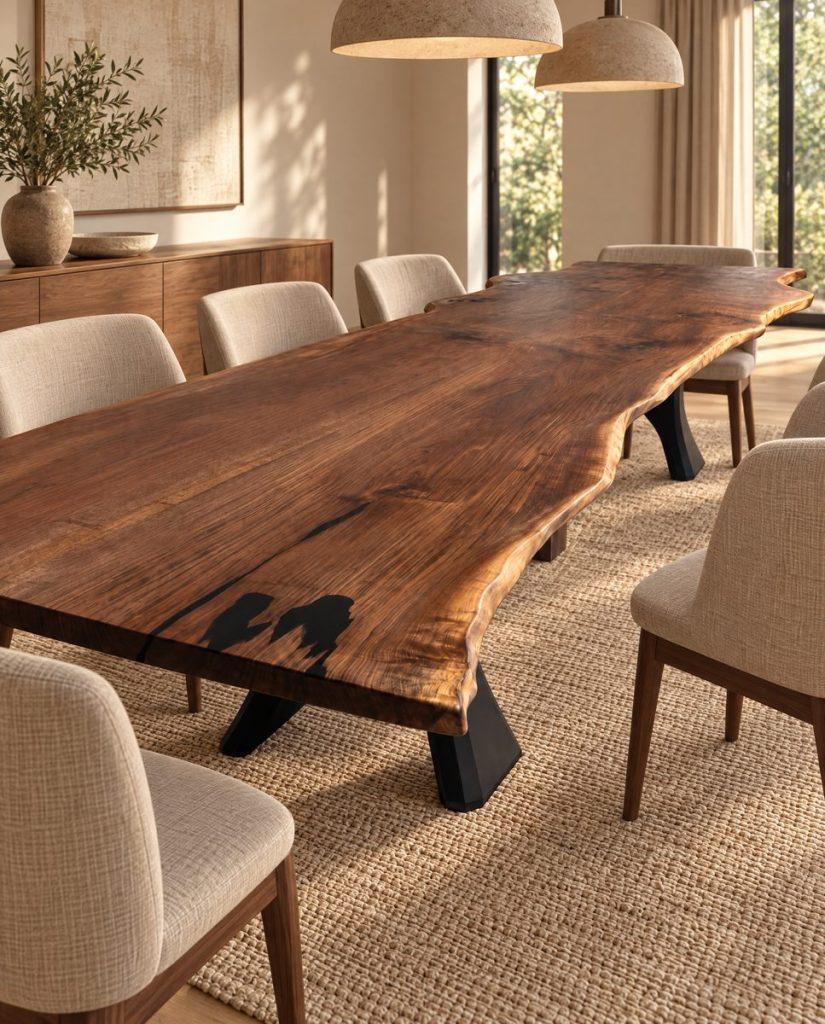
A live edge table is the piece a room gets built around, so getting the size right matters more than with almost any other furniture. Too big and the room feels cramped. Too small and the slab you fell in love with never gets the stage it deserves. Here’s how to size a custom live edge dining table for your space and the way you actually use it.
Start with the room, not the slab
Measure the room wall to wall, then subtract about 36 inches on every side of the table. That’s the clearance people need to pull out a chair and sit down. If it’s a main walkway, aim for 42 to 48 inches so nobody has to squeeze past a seated guest.
A quick example: a 12 by 14 foot dining room leaves room for a table roughly 6 to 8 feet long and 3 to 3.5 feet wide.
Count the seats
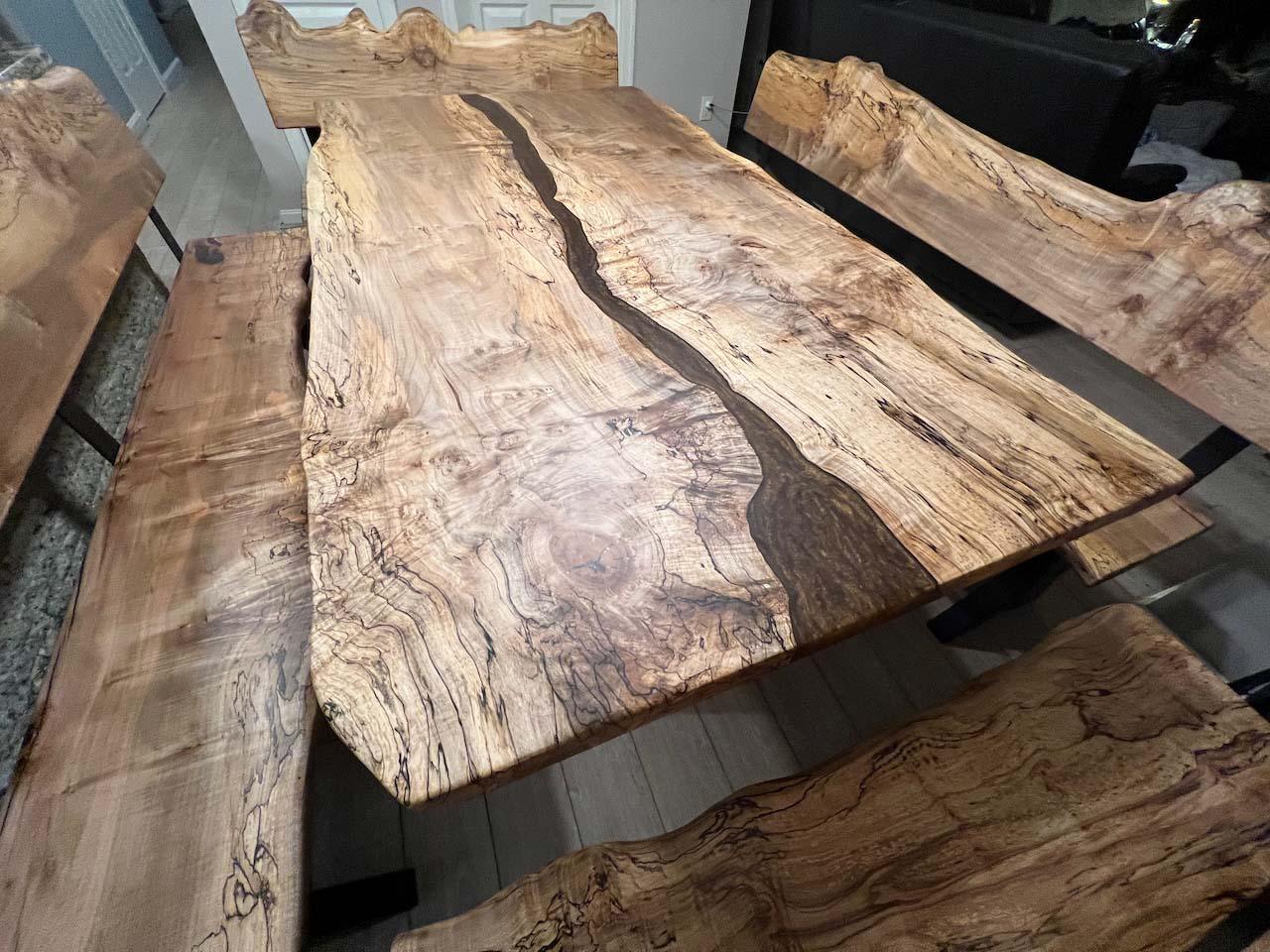
Plan on about 24 inches of table edge per person, and closer to 30 inches if you like elbow room or use armchairs.
- 4 people: 48 to 60 inches long
- 6 people: 72 to 84 inches long
- 8 people: 90 to 108 inches long
- 10 or more: 120 inches and up
If you’ll seat people at the ends, add about 12 inches to each end so knees clear the base.
Width: where live edge gets interesting
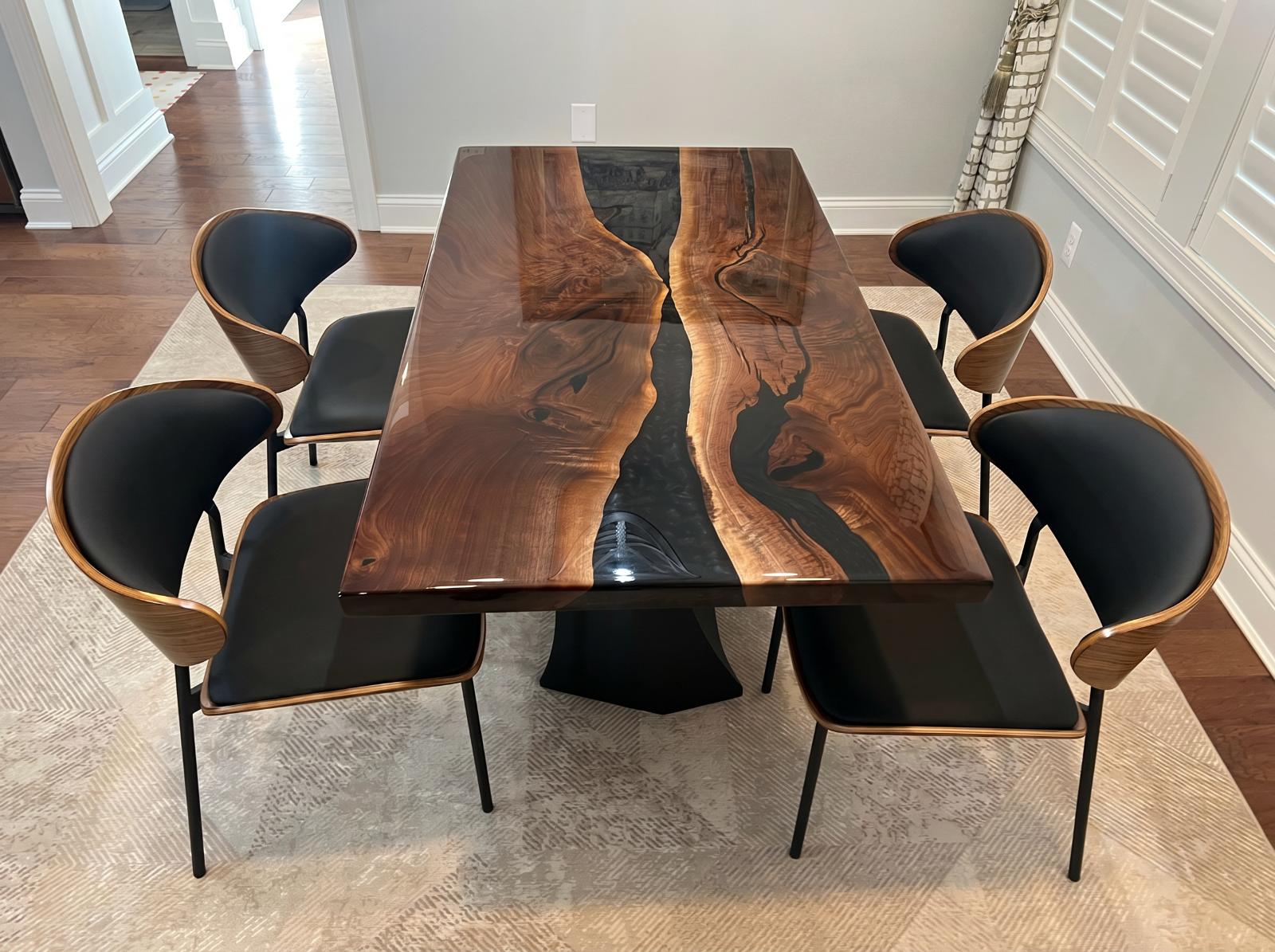
Most dining tables land between 36 and 42 inches wide. Narrower than 34 inches and plates and serving dishes start to crowd each other. Wider than 44 inches and it gets hard to talk or pass food across.
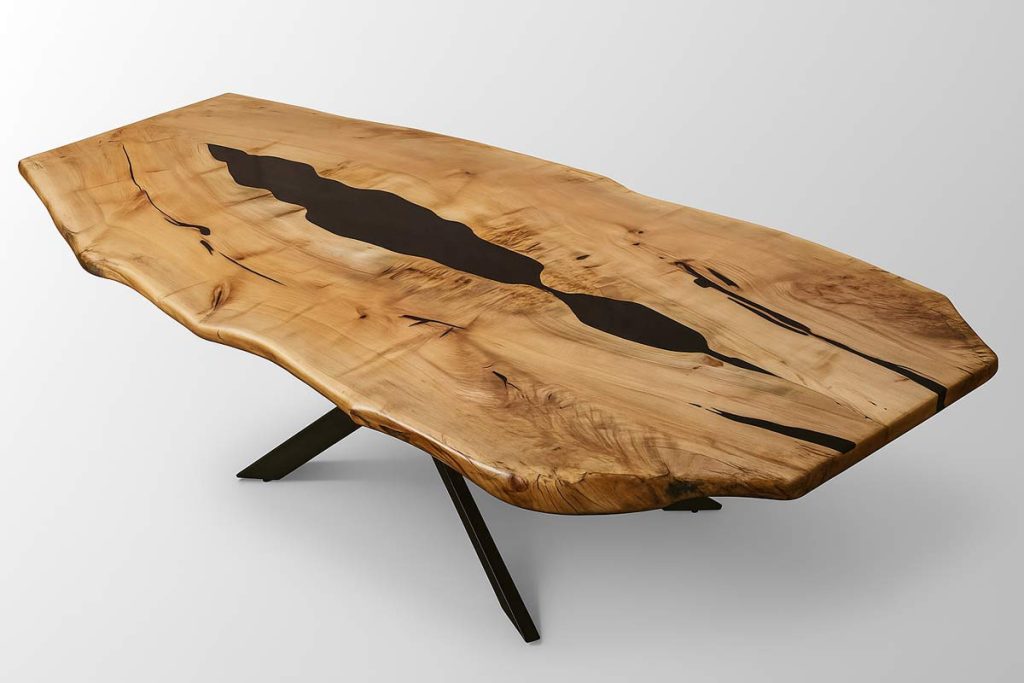
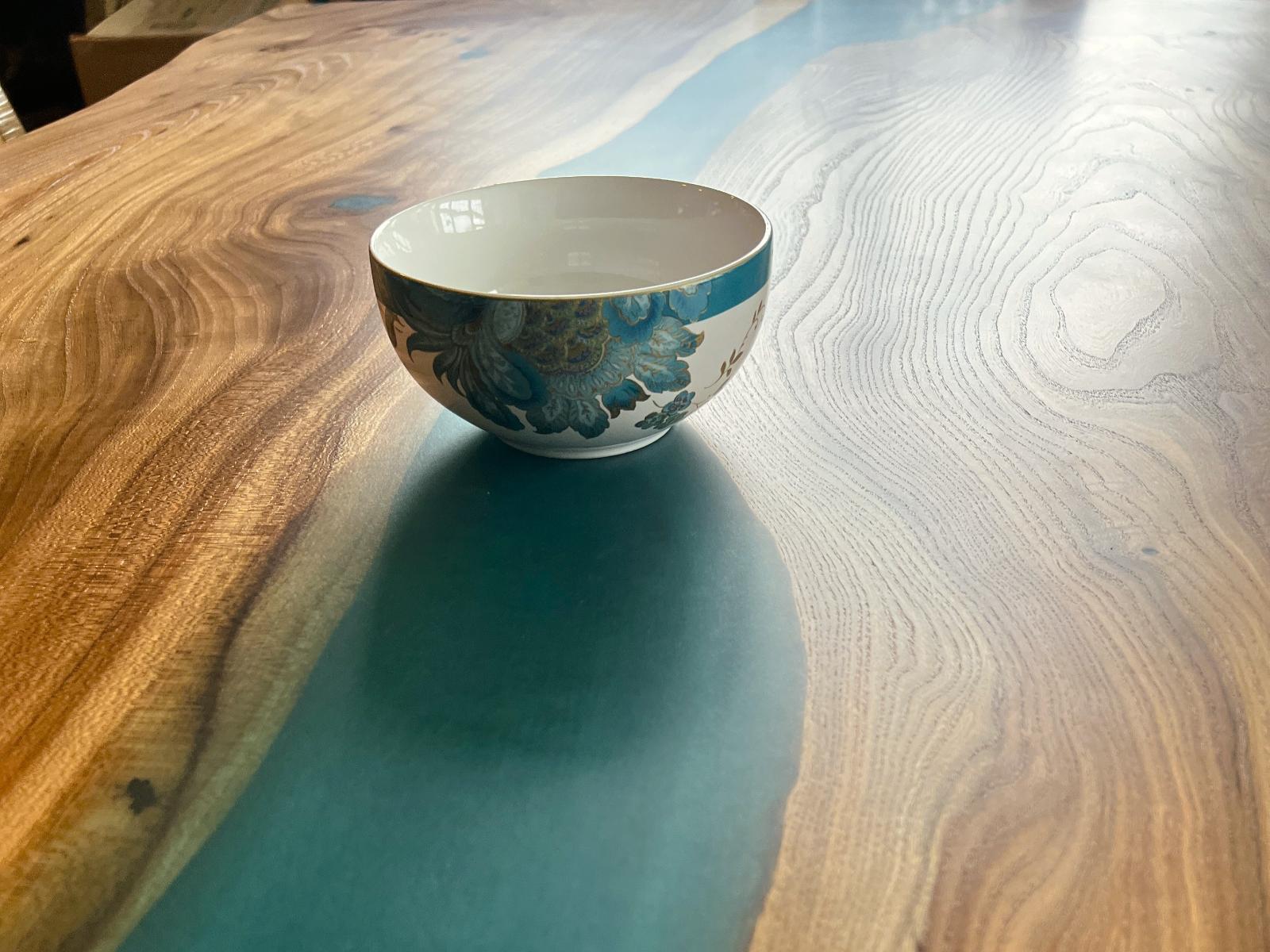
With live edge, the width changes along the length of the slab. Measure the narrowest usable point, not the widest, because that’s where people will actually sit. A bookmatched pair or an epoxy river can bring a narrow slab up to a comfortable width without losing the natural edge.
Height and the base
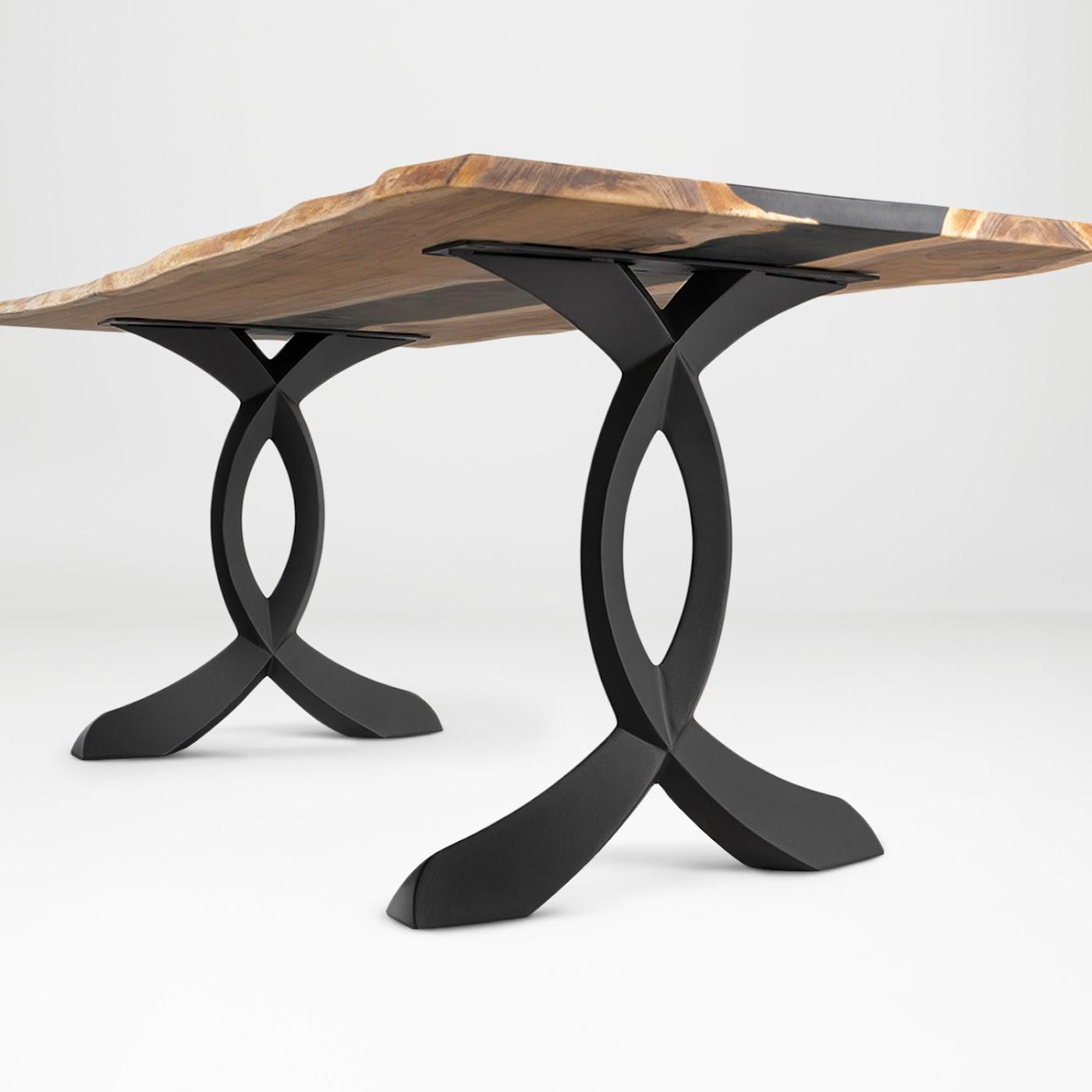
Standard dining height is 29 to 30 inches. Counter height is about 36 inches, and bar height is about 42 inches. The base matters as much as the top: trestle and U-shaped steel legs keep the ends open for seating, while a center pedestal works well on round or shorter tables.
Tape it out before you commit
Before choosing a slab, mark the table’s outline on the floor with painter’s tape and walk around it for a day or two. Pull chairs up to it. It’s the easiest way to know the size is right before the wood is cut.
Ready to start yours?
If you’re planning a custom live edge or epoxy dining table, we’ll help you choose the slab, the species and the size that fits your room. Price your table online, or reach out to Makers Woodshop to start your design.