Embracing Nature in Modern Furniture Design
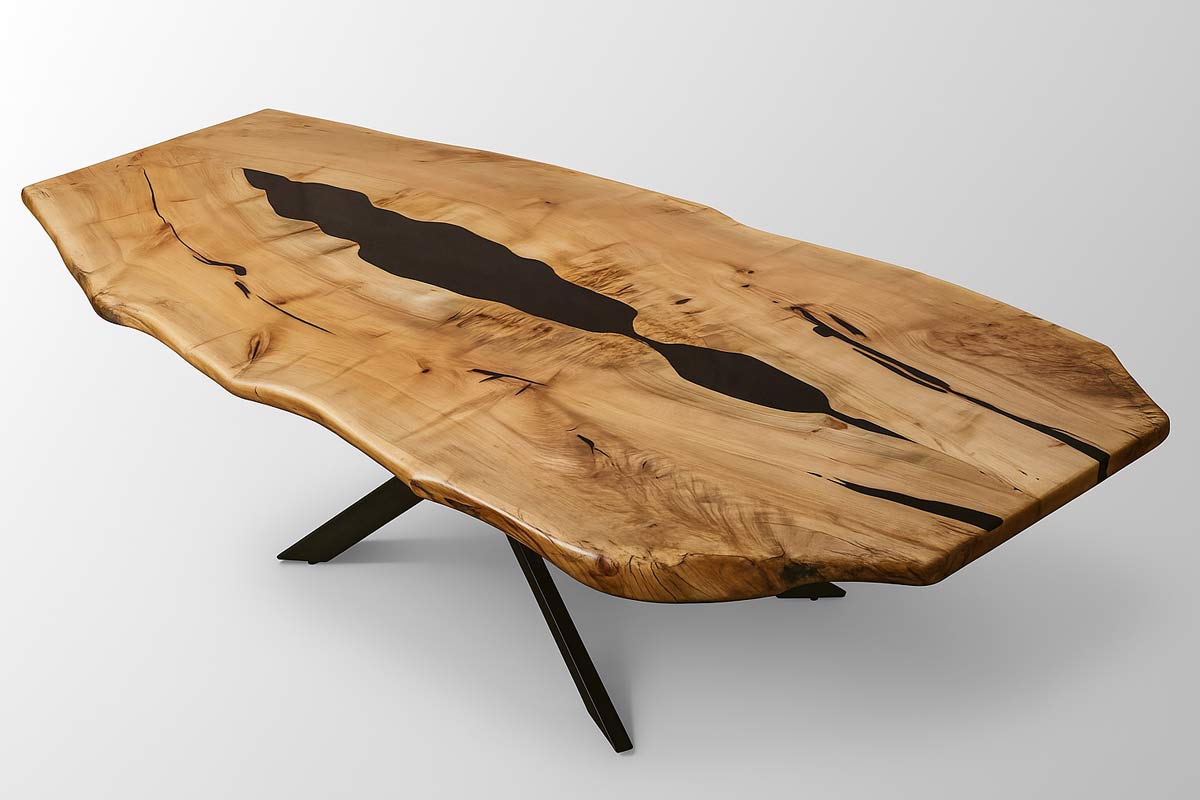
Live edge tables have a way of bringing the outside world in. Unlike mass-produced furniture, each slab carries the natural movement, shape, grain, and character of the tree it came from. The result is a table that feels warm, substantial, organic, and completely one of a kind.
At Makers Woodshop, we build custom live edge tables from carefully selected hardwood slabs, many of which begin as local logs before being milled, dried, surfaced, finished, and built in our Maryland shop. Every table is shaped by the natural beauty of the wood, but also by the details that matter to the client: size, wood species, edge style, finish, base design, and how the piece will be used in the home or business.
What Is a Live Edge Table?
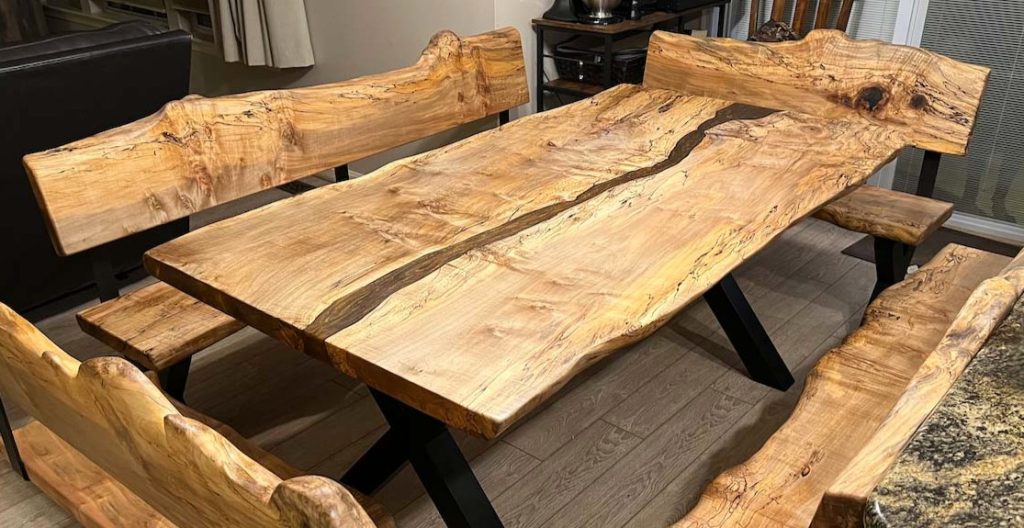
A live edge table is made from wood that preserves the natural outside shape of the tree. Instead of cutting every edge perfectly straight, at least one side of the slab follows the organic line of the trunk. This gives the table its signature look and makes every piece visually distinct.
You can often recognize a true live edge by the way the grain follows the natural outside edge of the slab. Rather than looking manufactured or overly uniform, the piece retains the flow, curves, and character that formed as the tree grew.
Live edge design became especially well known through the work of George Nakashima, whose furniture helped bring natural-edge woodworking into modern design. Today, live edge tables remain popular because they combine timeless craftsmanship with the individuality of the tree itself.
Should the Bark Stay on a Live Edge Table?
One of the most common questions people ask is whether the bark should remain on a live edge table. While bark may look rustic at first, we typically recommend removing it.
The reason is durability. Bark and wood have different densities and absorb moisture at different rates. The bond between the bark and the slab is naturally weak, which means the bark can loosen, crack, or fall off over time.
For a live edge table that is built to last, we remove the bark and the cambium layer underneath. This allows us to create a smooth, clean, durable edge that still preserves the natural shape of the tree. The goal is to keep the beauty of the live edge while making the table practical for everyday use.
From Log to Table: Our Process
Because we mill and dry all of our own wood, we have control over the process long before a table is ever built. That matters. A great live edge table starts with the right wood species, the right cut, the right drying process, and the right preparation.
Our process begins with sourcing logs, often from local trees that have come down due to age, disease, storm damage, or necessary removal. Once a log arrives at our mill yard, we decide how it should be cut based on species, size, figure, and the type of furniture it could become.
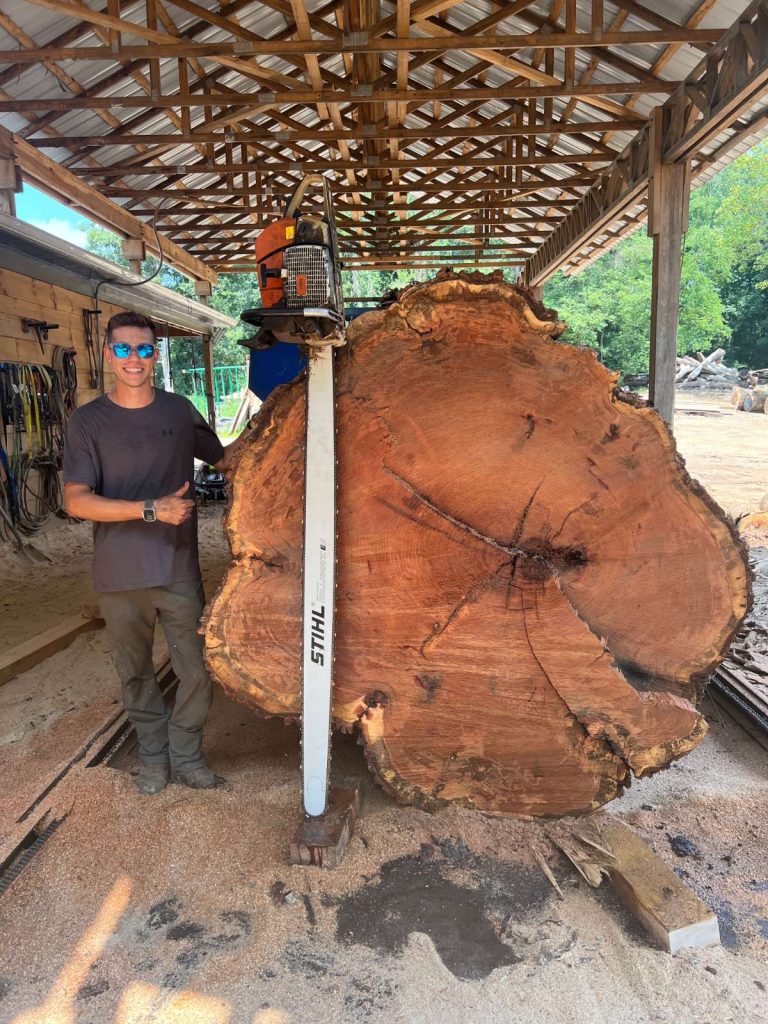
Many of the logs we work with are large-format hardwoods, including logs over 36 inches in diameter. Larger logs give us the ability to create wide slabs, dramatic grain patterns, book-matched sets, and substantial live edge tables with real presence.
Cutting and Drying the Slabs
Once a log is ready to be processed, it is cut into slabs. The thickness depends on the size and width of the material, but many slabs are cut thicker than the final table will be. This is intentional.
As wood dries, it moves. Wide slabs can cup, twist, or shift as moisture leaves the board. By starting with extra thickness, we allow room for flattening and surfacing later in the process. In many cases, a slab may lose a half inch or more of thickness before it becomes perfectly flat and ready to become furniture.
After milling, the slabs are stacked with small spacer strips called stickers between each layer. This allows air to move around the wood so moisture can escape evenly. Air drying is a slow but important stage, and depending on thickness and species, it can take a significant amount of time before the wood is ready for the kiln.
From there, the slabs are kiln dried until they reach the proper moisture content for furniture. Drying the wood correctly helps reduce future movement and creates a more stable finished table.
Surfacing and Preparing the Slab
After the wood is dry, the slab is surfaced. This step flattens the material and reveals the grain, color, and character hidden beneath the rough-sawn surface.
At Makers Woodshop, we use large-format surfacing equipment capable of handling oversized slabs. Once the slab is flattened, we can evaluate the piece more carefully and begin preparing it for its final design.
This is also when cracks, voids, knots, and natural openings are addressed. These features are part of what gives live edge furniture its character, but they need to be stabilized properly. We often use epoxy to fill and reinforce these areas, helping preserve the beauty of the wood while making the finished piece stronger and more functional.
Refining the Live Edge
A live edge should look natural, but it should not feel rough or unfinished. After the bark and cambium layer are removed, we carefully shape and sand the edge so it feels smooth to the touch.
Any sharp points, fragile areas, bumps, or rough spots are refined by hand. This keeps the natural movement of the slab intact while making the edge comfortable and practical. A well-prepared live edge should feel organic, but it should not catch on clothing, scratch someone walking by, or create weak points that will break away over time.
Sanding and Finishing
The finishing process brings the table to life. After the slab has been surfaced, stabilized, and refined, it is sanded through multiple stages to create a smooth, even surface.
We then apply a protective hard wax oil finish that enhances the natural color and grain of the wood while giving the piece durability for everyday use. This type of finish creates a natural look and feel instead of covering the wood with a heavy plastic-like coating.
The finish is designed to highlight the depth, figure, and warmth of the slab while helping protect the surface from regular use. The result is a table that feels refined but still connected to the natural material it came from.
Choosing the Right Base or Legs
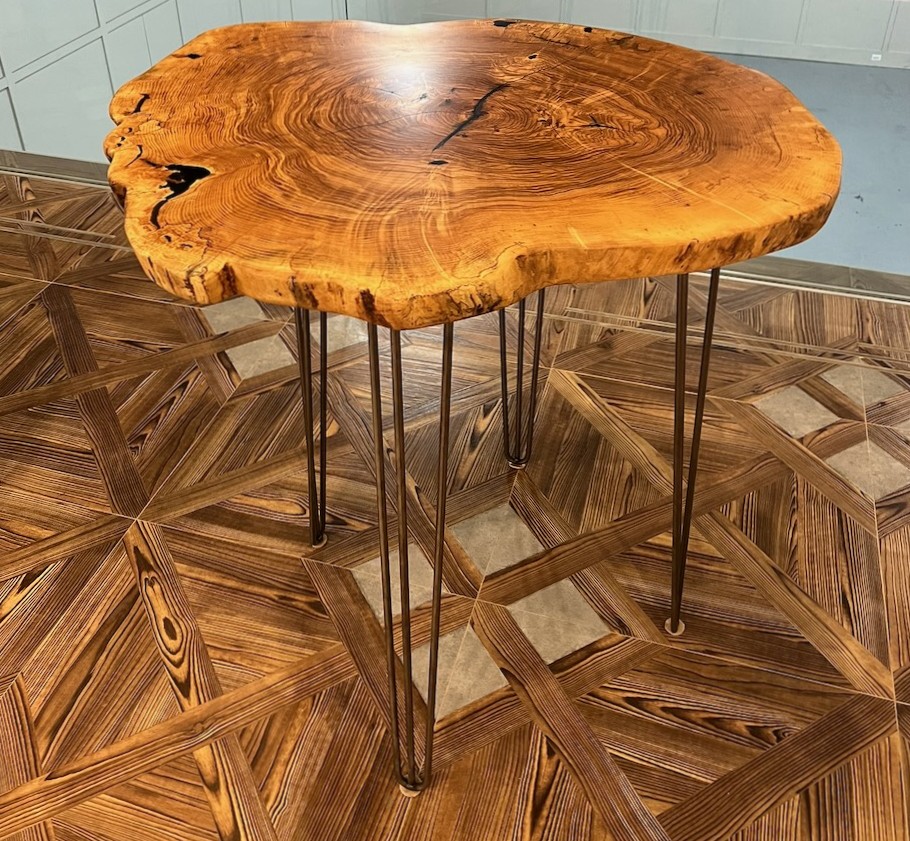
The base is an important part of the final design. A live edge slab can be paired with a wide variety of leg styles, from clean modern metal bases to traditional wood legs, trestle bases, pedestal designs, or custom-fabricated options.
The right choice depends on the room, the size of the slab, the style of the home or business, and how the table will be used. A large dining table may need a strong, balanced base with plenty of seating clearance. A conference table may call for a more refined commercial look. A coffee table may benefit from something lower, simpler, or more sculptural.
Because each table is custom, the base can be selected to complement the slab instead of competing with it.
Built for Homes, Businesses, and Hospitality Spaces
Live edge tables work beautifully in dining rooms, offices, restaurants, conference rooms, showrooms, and hospitality spaces. They can feel rustic, modern, refined, organic, bold, or understated depending on the wood species, slab shape, base style, and finish.
What makes them special is that no two are the same. The grain, knots, curves, color, and natural edge all come from the life of the tree. When crafted properly, those natural details become the centerpiece of the finished piece.
Why Choose a Custom Live Edge Table?
A custom live edge table gives you control over the details that matter most. Instead of choosing from a limited set of factory-made sizes and finishes, you can select the slab, dimensions, wood species, edge character, finish, and base style that fit your space.
At Makers Woodshop, we guide clients through the process, so the finished table feels intentional from the beginning. Whether you want a bold dining table, a statement conference table, a warm family gathering piece, or a custom table for a restaurant or business, the goal is the same: to create something beautiful, functional, and lasting.
A Table with a Story
Every live edge table begins with a tree. By the time it reaches your home or business, it has gone through a careful process of milling, drying, flattening, sanding, finishing, and final assembly. The finished piece carries that story forward.
A custom live edge table is not just furniture. It is a natural focal point, a gathering place, and a lasting piece of craftsmanship built around the character of real wood.
If you are considering a custom live edge table, bar top, countertop, desk, or conference table, Makers Woodshop can help you choose the right slab and design a piece that fits your space beautifully. Contact us today to get started!