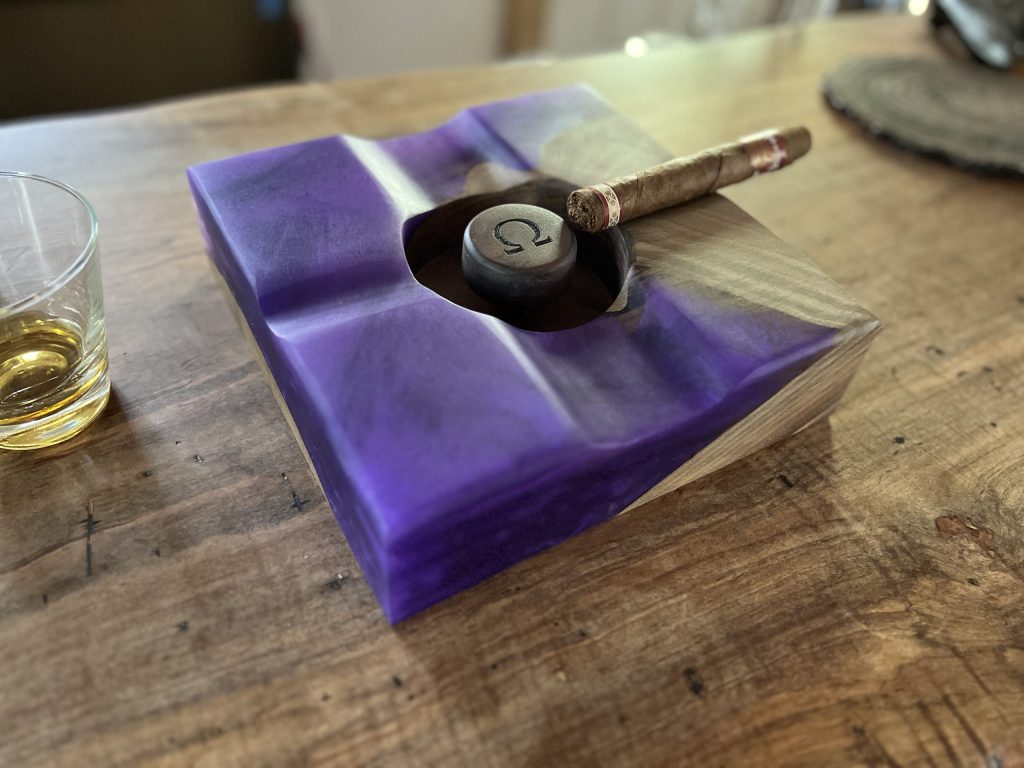
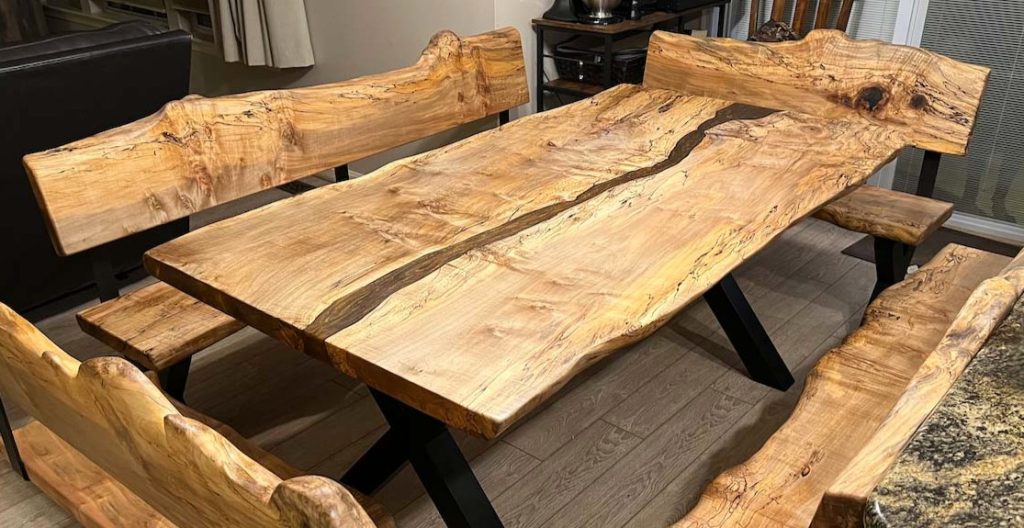
Live edge wood has become a popular choice for homeowners, designers, and businesses looking for furniture with natural character. Unlike standard lumber that is cut into straight, uniform boards, live edge slabs preserve the natural outside edge of the tree. This gives each piece its own shape, grain, color, movement, and rustic beauty.
Because every slab is different, the cost of live edge wood can vary. Price depends on the wood species, slab size, thickness, drying process, finish, and the amount of work required to turn the slab into a finished piece.
The Live Edge Slab Creation Process
“Live edge” refers to wood that keeps the natural edge of the tree rather than being cut into perfectly straight, finished sides. These slabs maintain much of the original beauty of the tree, giving the finished piece a natural, organic, and one-of-a-kind look.
Before a slab becomes a table, bar top, counter, or other furniture piece, it goes through several important steps.
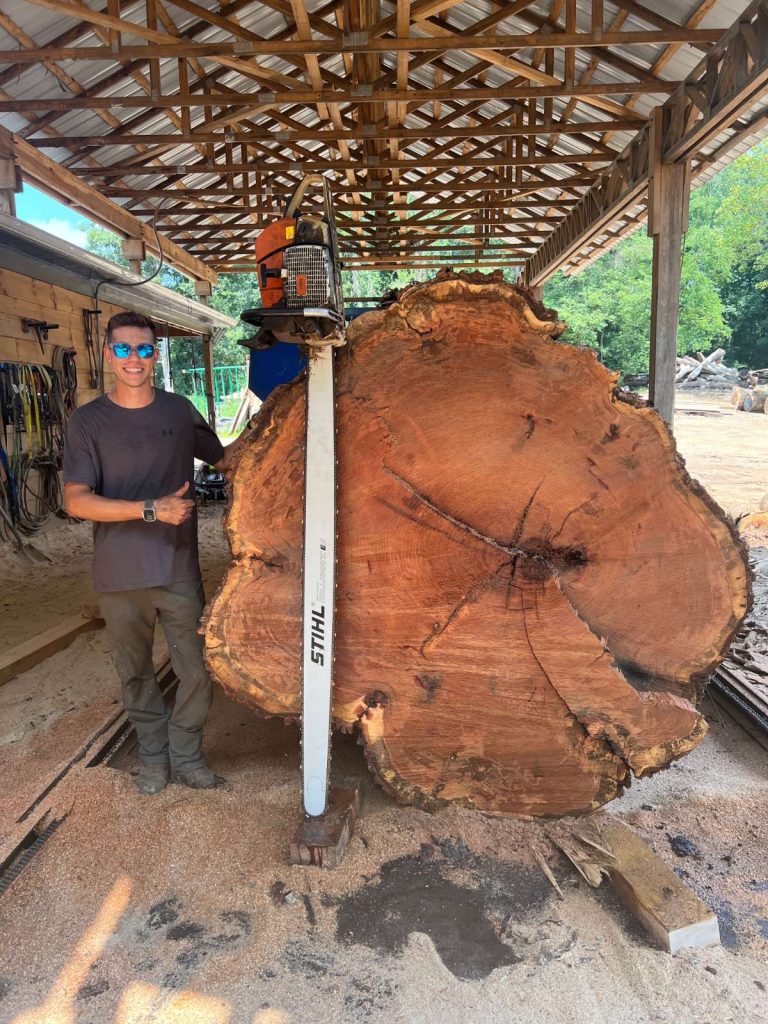
First, the log is cut into slabs at the right dimensions. Many live edge slabs are cut at least two inches thick, though the final thickness may change after drying, flattening, sanding, and finishing.
Next, the slab is air dried, kiln dried, or both. Drying helps reduce moisture in the wood and minimizes the risk of future warping, cracking, twisting, or movement.
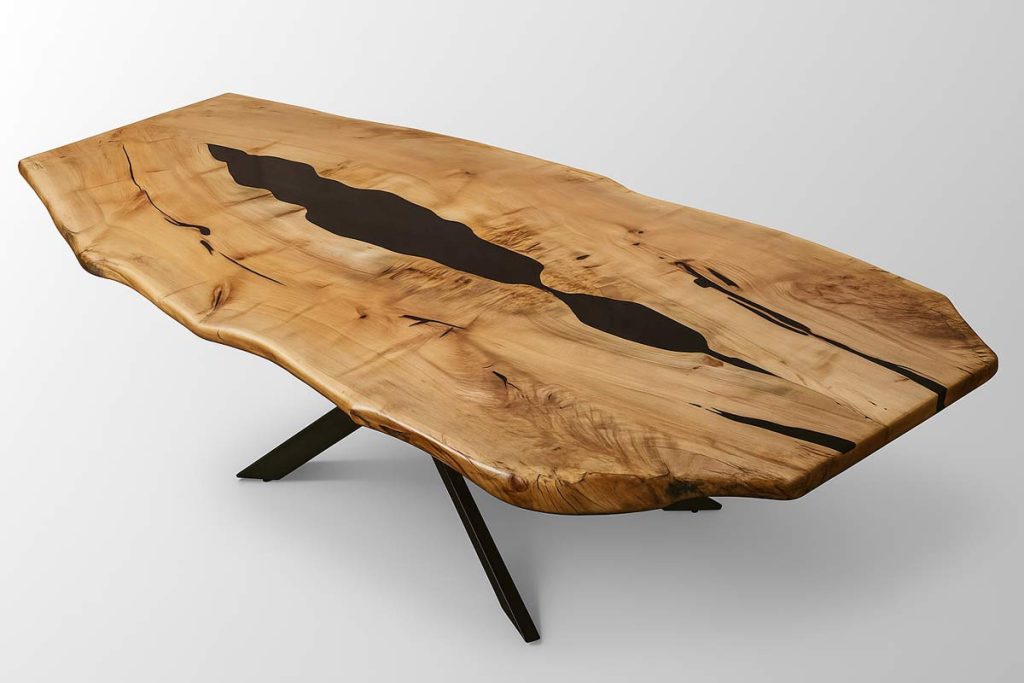
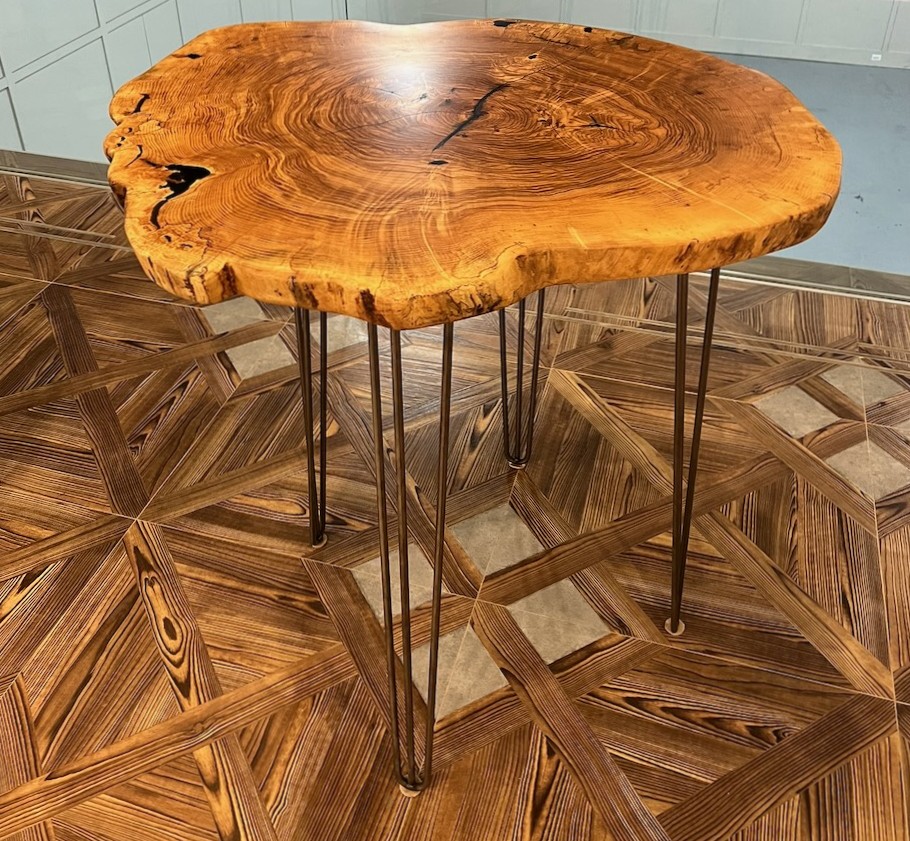
Once the wood is dry, the slab is examined for natural features such as knots, burls, limbs, cracks, voids, grain patterns, and color variation. These details often become part of the finished design.
After that, the slab is cut to the right size for the specific project. Edges are then shaped and sanded as needed. Some customers prefer a smoother, more refined live edge, while others like a more rustic natural look.
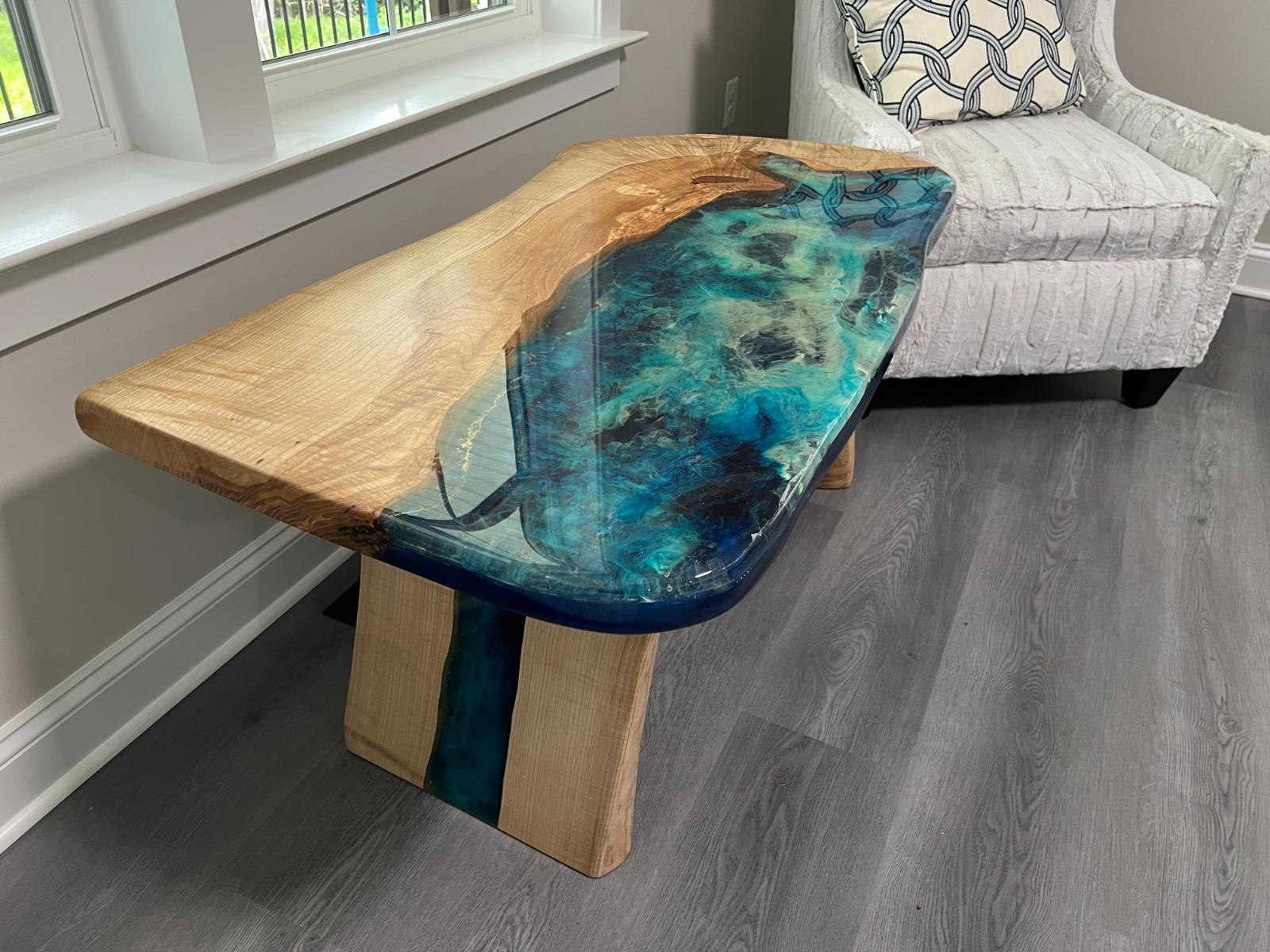
Voids, cracks, and openings can be cleaned and filled with epoxy, or they can sometimes be left natural depending on the design and use of the piece.
Finally, the surface is sanded smooth and sealed with a protective finish. The result is a custom piece that keeps the character of the tree while becoming functional for everyday use.
Every live edge piece is built around the customer’s space, style, and intended use. The goal is to create something that is both practical and visually striking.
How to Order Your Live Edge Project
Knowing how to order the right live edge piece will help your woodworking team understand what you need and make sure the finished project fits your space.
Before starting, it helps to think through a few important details: shape, size, material, purpose, and the overall feel you want the piece to have.
Shape and Size
The right dimensions are one of the most important parts of ordering a live edge project. A beautiful slab still needs to fit the room, function properly, and leave enough space for people to move comfortably around it.
For a dining table, consider the number of people you want to seat, the size of the room, and the space needed for chairs. For a bar top or countertop, think about length, depth, overhang, support, and how the piece will be used. For shelves, desks, mantels, or coffee tables, measure the space carefully before choosing a slab.
Exact measurements help prevent problems later and allow the piece to be built with the right proportions from the beginning.
Material
The type of wood you choose will affect the look, durability, cost, and overall feel of the finished piece. Live edge projects can be made from many species, including walnut, maple, cherry, oak, ash, elm, cedar, poplar, and other hardwoods.
For a dining table or heavily used surface, it is usually best to choose a durable wood that can handle regular use while still offering the color and grain you want. Walnut provides a rich, premium look. Maple is clean and light. Cherry is warm and classic. Ash and oak offer bold grain and strong character.
The right material should be beautiful, durable, and appropriate for the way the piece will be used.
Purpose
It is also important to think about where the live edge piece will go and how it will be used. A coffee table may need smoother edges than a rustic shelf. A dining table should be comfortable for daily use. A bar top may need extra attention to spills, finish durability, and support.
The clearer your vision is before the project begins, the easier it is to choose the right slab, finish, edge style, and base.
A woodworking expert can help guide those decisions, but it helps to come prepared with the basics: where the piece will go, how large it needs to be, what style you like, and how it will be used.
Trust a Quality Wood Shop for Live Edge Furniture
The natural look of live edge slabs makes them a popular choice for one-of-a-kind rustic and modern furniture. Because each slab is different, it is important to work with a shop that understands how to cut, dry, surface, stabilize, and finish live edge wood properly.
A quality wood shop can help you choose the right slab, understand the cost, and create a finished piece that fits your home or business.
FAQs on Live Edge Slabs
Live edge wood is loved because every piece is completely unique. A well-made live edge surface can become a long-lasting statement piece and even an heirloom. Here are a few common questions people ask before starting a project.